
What to Do With Kids on Family Vacations in Costa Rica?
Costa Rica is one of the best countries in the world to travel with children. The wildlife alone, sloths, howler monkeys, scarlet macaws, sea turtles, keeps kids genuinely engaged without any manufactured entertainment. Add active volcanoes, thermal hot springs, ziplines through cloud forest, and beaches on two coasts, and the trip plans itself.
The country is safe, English-friendly, and built for family travel. Costa Ricans, known as Ticos, are famously welcoming to families. The culture places family at the center of everything, which visitors feel immediately.
This guide covers the best things to do in Costa Rica with kids, broken down by destination, age group, and activity type, so families can plan a trip that actually fits their children.
Best Destinations in Costa Rica for Families To Visit With Kids
Not every part of Costa Rica suits every type of family. Below is a breakdown of the top destinations and what makes each one stand out for travelers with children.
La Fortuna and Arenal Volcano
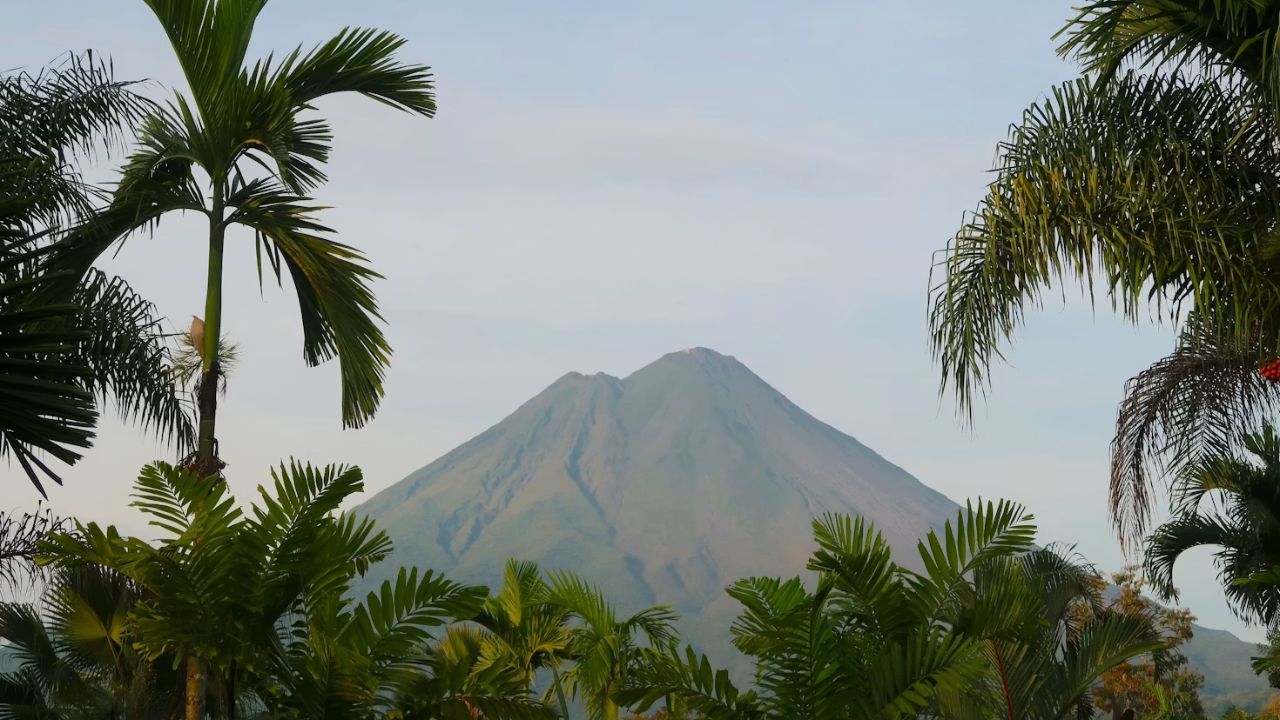
La Fortuna is widely considered the single best destination in Costa Rica for families, and it is easy to understand why. The cone-shaped Arenal Volcano looms dramatically in the background while the surrounding region offers more family-friendly activities than anywhere else in the country.
Children can walk hanging bridges through the rainforest canopy, soak in thermal hot springs, go ziplining above the treetops, hike old lava flows, join guided sloth walks, take a gentle river float, or rappel down waterfalls. The town itself has a good range of accommodation from budget guesthouses to all-inclusive resorts, and restaurants here are reliably welcoming to young visitors.
Manuel Antonio
Manuel Antonio, on the central Pacific coast, is Costa Rica’s most visited national park and one of the easiest places in the country to have incredible wildlife encounters with zero effort. Capuchin monkeys walk within arm’s reach of the path. Sloths hang visibly in the trees overhead.
Iguanas and coatis are constant companions on the trails. After hiking, families can head directly to one of the beautiful white sand beaches inside the park for a swim. It is worth noting that the park is closed on Tuesdays and that advance booking for entrance tickets is required through the SINAC system.
Going with a guide is strongly recommended for families, as professional naturalists dramatically increase the number of animals spotted and use spotting scopes that make distant sloths and birds visible to children.
Monteverde

Monteverde and the Santa Elena Cloud Forest Reserve sit at around 1,500 meters above sea level in a perpetually misty, temperate highland environment that feels completely unlike the rest of Costa Rica. The cool air is a welcome change, and the dense cloud forest is extraordinary.
Families can walk hanging bridges at Selvatura Park or Mistico Park, zipline through the clouds, visit the Monteverde Butterfly Garden, explore the Bat Jungle, or take a guided night walk to spot kinkajous, sleeping birds, and red-eyed tree frogs. Monteverde is particularly good for families with children who have shorter attention spans, as the variety of short, contained experiences keeps things moving.
Guanacaste
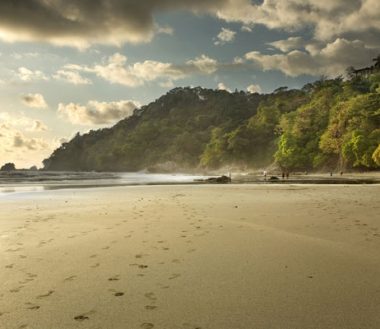
Guanacaste Province on the northern Pacific coast is the place for families who want a beach-focused trip with adventure on the side. The dry season here is the longest and most reliable in the country, making it ideal for families who need predictable weather.
Tamarindo is the most family-friendly town in the region, offering excellent surf schools that cater specifically to children, easy beach access, a good restaurant scene, and a lively but not overwhelming atmosphere. Playa Flamingo, Playa Conchal, and the Papagayo Peninsula are excellent alternatives for families seeking quieter, more upscale settings.
Tortuguero
Tortuguero, on the Caribbean coast, is unlike anywhere else in Costa Rica. The town is accessible only by boat or small plane, which makes the journey there an adventure in itself.
The national park is the most important nesting site for green sea turtles in the Western Hemisphere, and the boat-based canals that wind through the jungle are one of the finest wildlife-watching experiences in the country. Families who make the effort to get here are rewarded with sightings of river otters, caimans, river turtles, boat-billed herons, and howler monkeys at close range.
Puerto Viejo and the Caribbean Coast
The Caribbean coast has a completely different energy from the Pacific side, shaped by Afro-Caribbean culture, reggae music, incredible food, and calmer seas during the Caribbean dry season (roughly February to April and September to October).
Puerto Viejo is the main base and offers access to Cahuita National Park, one of Costa Rica’s only coral reef systems, as well as some of the country’s most laid-back beaches. Families looking for something less resort-oriented and more culturally immersive tend to gravitate toward this part of the country.
Things to Do in Costa Rica With Kids by Age Group
One of the most useful things to know before planning a Costa Rica family trip is which activities suit which ages. Not everything is appropriate for every child, and some activities have minimum age or weight requirements that are worth knowing in advance.
Babies and Toddlers (0 to 4 years)
Costa Rica is more manageable with very young children than many parents expect. A growing number of national parks, including Manuel Antonio, Arenal Volcano National Park, and Carara National Park, have well-maintained, relatively flat trails that are suitable for all-terrain strollers.
Wildlife watching requires no particular physical effort, and even the youngest visitors tend to be captivated by monkeys and birds at close range. Thermal hot springs at resorts like Tabacon or Baldi in La Fortuna have shallow pools that are perfect for toddlers.
La Paz Waterfall Gardens near San Jose is an excellent half-day option with paved pathways, butterflies, hummingbirds, toucans, and a waterfall trail that is manageable with small children.
Young Children (5 to 9 years)
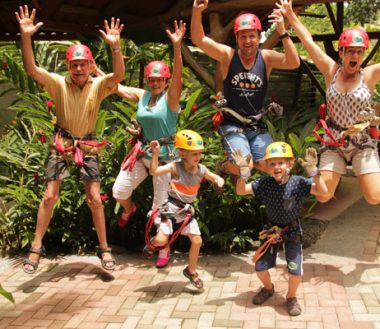
This age group tends to get the most out of Costa Rica. Many of the signature activities have minimum ages in this range. Ziplines at most reputable operators accept children from age 6 or 7 provided they meet minimum weight requirements, which typically start at around 25 kilograms. Hanging bridge walks are suitable for any child comfortable with heights and covered surfaces.
Chocolate and coffee tours, widely available throughout the country, are extremely popular with this age group because they are hands-on, educational, and almost always include tastings.
Gentle river float trips on Class I and II water are appropriate for children from around age 5 with parental supervision. Night walks, which reveal tree frogs, walking stick insects, tarantulas, and kinkajous, are consistently described by children in this age range as one of their most vivid travel memories.
Tweens and Teenagers (10 years and Above)
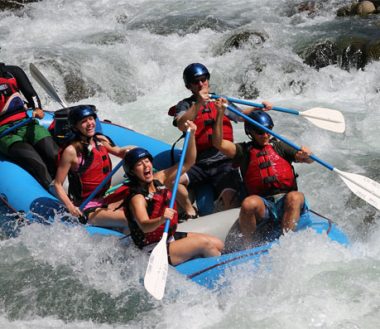
Older children and teenagers are the ideal age group for Costa Rica’s more adrenaline-focused experiences. Whitewater rafting on the Pacuare River, considered one of the world’s top whitewater rivers, is typically accessible from age 10 on Class II and III sections and from age 12 on more challenging Class IV sections. Surfing lessons are a natural fit for this age group.
Canyoneering and waterfall rappelling are available in several locations, including La Fortuna and near Manuel Antonio. Mountain biking on proper trail networks is an option for fit teenagers comfortable on technical terrain.
The Osa Peninsula and Corcovado National Park, one of the most biologically intense places on earth, reward older children who are prepared to hike properly and spend time in remote wilderness.
Beyond the core national parks, there are several specific wildlife experiences that families should know about.
Sloth Encounters
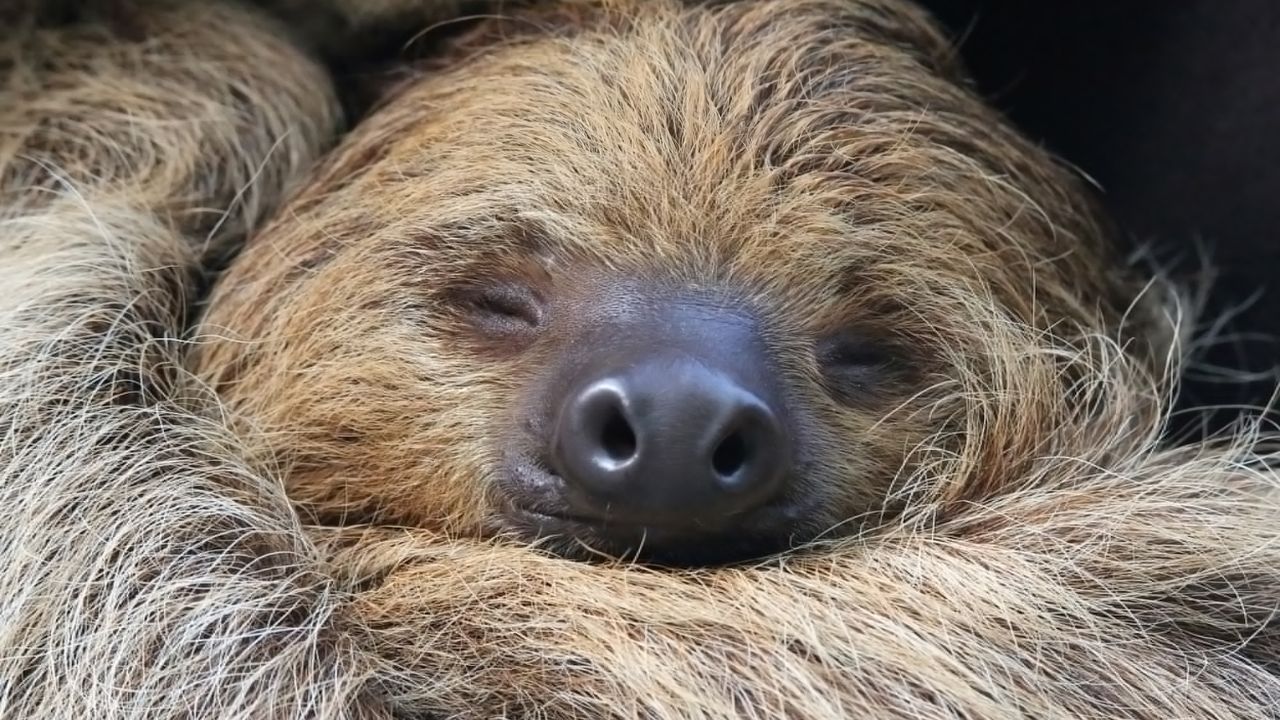
Two-toed and three-toed sloths are present throughout Costa Rica, but the chances of a meaningful encounter are much higher with a guide. In La Fortuna, dedicated sloth walks with trained naturalists are widely available and typically last two to three hours along forest trails where guides have learned the regular routes of known individuals.
The Toucan Rescue Ranch near San Jose and the Sloth Sanctuary in Cahuita on the Caribbean coast both allow visitors to observe rescued sloths in a responsible educational setting.
Sea Turtle Nesting
Watching sea turtles nest is one of the most powerful wildlife experiences available to families in Costa Rica, and the country has several key nesting sites. Tortuguero National Park on the Caribbean coast hosts the largest green sea turtle nesting aggregation in the Western Hemisphere, with nesting season running from July through October. Ostional Wildlife Refuge on the Nicoya Peninsula hosts mass Olive Ridley turtle nesting events known as “arribadas,” which occur roughly monthly between July and December. Leatherback sea turtles nest at Playa Grande in Guanacaste between October and March. All turtle watching in Costa Rica is conducted through licensed guides under strict protocols to protect the animals.
Night Walks
Night walks are one of the most consistently memorable activities for children visiting Costa Rica. With a good headlamp and a knowledgeable guide, the forest at night reveals red-eyed tree frogs, poison dart frogs, sleeping iguanas, tarantulas, walking stick insects, kinkajous, and occasionally even ocelots. Most eco-lodges and tour operators in Manuel Antonio, Monteverde, La Fortuna, and Tortuguero offer guided night walk experiences ranging from one to three hours.
Whale Watching
The waters off Costa Rica’s southern Pacific coast, particularly around Uvita and the Marino Ballena National Park, are an important breeding and feeding ground for humpback whales. Costa Rica is one of only a few places in the world where humpbacks from both the Northern and Southern Hemispheres visit, resulting in a whale watching season that spans most of the year.
The peak months are July through November for Southern Hemisphere whales and December through April for Northern Hemisphere visitors. Spinner dolphins and bottlenose dolphins are present year-round in these waters.
Bioluminescence Tours
Several bays and river estuaries along Costa Rica’s coastline contain microscopic organisms called dinoflagellates that emit blue light when disturbed. The result is one of nature’s most genuinely magical spectacles: water that glows blue-green with every movement. Isla Chiquita near the Nicoya Peninsula is one of the most consistently recommended spots for bioluminescence kayaking tours with children. The experience is most vivid on darker, moonless nights between July and November.
Family-friendly Hiking Trails in Costa Rica
What makes Costa Rica so ideal for family vacations is the fact that parents don’t really need to do too much to entertain the kids: the country’s wildlife-enriched wilderness does a great job of grabbing everybody’s attention. A nature lover’s dream, this compact country is enriched with a host of eco-tourism projects that offer educational and totally fun activities for kids of all ages. In Costa Rica, kids learn about the importance of environmental protection by discovering rare and endangered species, by walking on hanging bridges in virgin forests and by exploring national parks full of creatures, sounds and smells. You’ll be amazed how fascinated children can be in unspoiled nature and even if you think your child is not the nature-lover you’d hoped he/she would be, just wait until you see them here, locking eyes with a sloth, spotting colorful toucans and giggling at the piercing call of howler monkeys. Jungle experiences are the #1 attraction for families visiting Costa Rica and rest assured that there are plenty of eco-lodges that offer comfortable stays for even the most creepy-crawly-phobic child (or parent). See our selection of the Best National Parks in Costa Rica that make for superb family vacations.

Family-friendly Hiking Trails in Costa Rica
Families heading to Costa Rica for the first time can be anxious about the country’s extensive maze of hiking trails, thinking that the options for young families are limited. Not so! The most popular destinations, in fact, are tailor-made for family vacations, offering a wide array of options for parents with young kids in tow. Visiting Manuel Antonio and La Paz Waterfall Gardens to enjoying leisurely walks is a no-brainer for first-time visitors, especially those with very young kids or those who don’t normally hike very much in the great outdoors. If your family is a bit more adventurous and used to hiking then the whole country really is your oyster: Costa Rica boasts a multitude of hikes to waterfalls, mountain peaks, temperate and cloud forests, as well as endless miles of glorious beaches that can be walked for hours on end. You can read more about our favorite family vacation hiking trails.
Here is a closer look at some of the most family-appropriate trail options across the country.
Manuel Antonio National Park
The trails inside Manuel Antonio National Park are among the most accessible in the country. The main loop trail is well-maintained, relatively flat, and leads to several beautiful beaches. Distances are manageable even for young children, with the longest loop covering around 7 kilometers. The park must be entered with a licensed guide, which is actually an advantage for families because naturalist guides dramatically increase wildlife sightings. The park has maximum daily visitor limits, so booking entrance tickets in advance is essential.
La Paz Waterfall Gardens
Located about 90 minutes from San Jose on the road toward La Fortuna, La Paz Waterfall Gardens is one of the most accessible and rewarding half-day experiences in Costa Rica for families with young children.
A paved walking trail winds past five separate waterfalls, a hummingbird garden with dozens of species feeding at eye level, a butterfly observatory, a serpentarium, a frog exhibit, a jaguar and puma enclosure, and a walk-through aviary. It is almost entirely walkable for toddlers and requires very little physical fitness.
Mistico Hanging Bridges, La Fortuna
Mistico Arenal Hanging Bridges Park sits just outside La Fortuna and offers a self-guided trail of 16 bridges, including six suspended hanging bridges, winding through 250 hectares of primary rainforest.
The full circuit covers approximately 3 kilometers and takes between 90 minutes and 2 hours. Children who are comfortable with heights find this enormously exciting. The views toward Arenal Volcano on clear mornings are spectacular.
Rio Celeste, Tenorio Volcano National Park
The Rio Celeste trail in Tenorio Volcano National Park leads to a turquoise waterfall that is genuinely unlike anything else in Central America. The river gets its extraordinary blue-white color from a chemical reaction between volcanic minerals and the water.
The main trail to the waterfall is approximately 4 kilometers round trip on a mostly flat, well-maintained path. At the waterfall itself there are around 200 steps to descend to the viewing area at the base. Entrance tickets must be booked online in advance through the SINAC system, as the park has a strict daily visitor limit and does not sell tickets at the gate.
Monteverde Cloud Forest Trails
The Monteverde Cloud Forest Biological Reserve has more than 13 kilometers of maintained trails ranging from easy one-kilometer loops to more demanding full-day hikes. For families with young children, the most popular option is the guided two-hour walk through the primary forest with a naturalist, which keeps distances manageable while maximizing the chance of seeing quetzals, bellbirds, and other spectacular cloud forest species. Children of all ages find the persistent mist and moss-draped trees genuinely atmospheric.
Read more about the favorite family vacation hiking trails in Costa Rica.
Family-friendly Resorts in Costa Rica
Family-centered resorts are very popular here, especially along the north-western Pacific coastline, where you’ll find a bevy of excellent choices along some of the most celebrated beaches in the country. Yet if you’re looking for some quality time away from the maddening distractions of everyday life, then you might want to look into some of Costa Rica’s most unplugged eco-tourism lodges instead, where jungle activities, surfing, swimming, snorkeling and night wildlife-watching tours ensure the kids not even notice the Wi-Fi is missing. Read more about some truly special Family-friendly Resorts in Costa Rica.
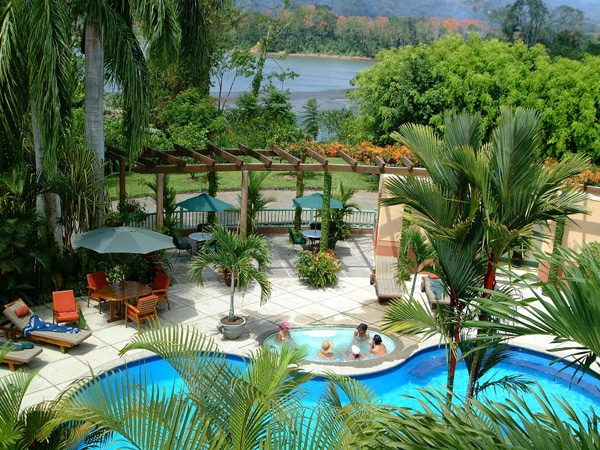
Costa Rica’s family-friendly accommodation options break down into several distinct categories, each suited to a different kind of trip.
All-Inclusive and Large Resorts
The Papagayo Peninsula in Guanacaste is the heartland of Costa Rica’s large resort market. Properties here typically offer kids’ clubs, multiple pools, water sports, babysitting services, and a full range of organised activities.
The Andaz Peninsula Papagayo, the Four Seasons Costa Rica, and the Dreams Las Mareas all sit in this category and are suited to families who want a high level of service and on-site amenity without having to think too hard about logistics.
Eco-Lodges
Eco-lodges represent the other end of the spectrum and are arguably the more authentic Costa Rica experience. Properties like Lapa Rios on the Osa Peninsula, Monteverde Lodge in the cloud forest, and Tortuga Lodge in Tortuguero immerse families in their natural surroundings completely.
Children here learn by doing, whether that means joining a guided night walk on the lodge grounds, waking up to howler monkeys in the trees outside the cabin, or sitting in on a naturalist presentation about local wildlife. These lodges typically have smaller guest numbers, which means a quieter and more personal experience.
Mid-Range Boutique Hotels
For families looking for something between all-inclusive resorts and remote eco-lodge, Costa Rica has an excellent selection of boutique hotels. Si Como No in Manuel Antonio is frequently cited as one of the best family hotels in the country, with two pools, a cinema, a butterfly garden, and direct access to the national park. Arenal Observatory Lodge in La Fortuna sits directly adjacent to the national park and offers extraordinary volcano views alongside a varied activity menu.
Read more about some truly special Family-friendly Resorts in Costa Rica.
The Best Amusement Parks in Costa Rica
It may surprise you to learn that Costa Rica isn’t replete with amusement parks and that’s because the whole country is considered a nature-filled family playground – the need for dedicated play parks is not as pronounced here as in other countries. Nevertheless, there are a few great options if you have children of varying ages and just wish to treat them to a different kind of day out. Costa Rica’s best amusement parks are much more organic and less commercial than those back home and most visitors love them precisely for this reason. In Costa Rica, kids can slide down thrilling water rides created with thermal springs, fly through tree-tops in pristine tropical rainforests and even indulge in a multi-sport adventure outing where horseback riding, zip-lining and kayaking provide all the thrills.
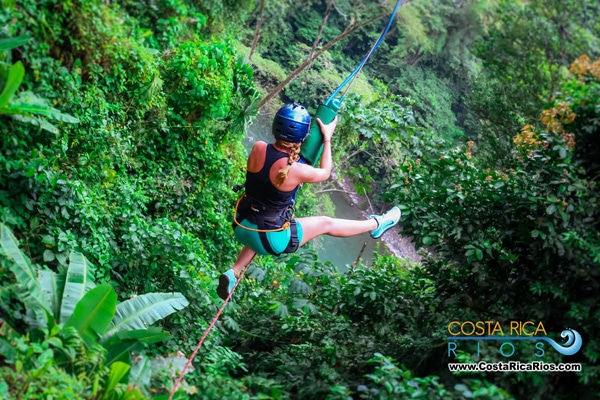
A few specific options are worth highlighting.
Tabacon Thermal Resort, La Fortuna
Tabacon is one of the most famous thermal spring resorts in Central America. The Arenal Volcano heats underground water that flows naturally through a series of pools and waterfalls at temperatures ranging from pleasantly warm to genuinely hot.
The resort has deliberately designed shallower areas and gentler flow rates in sections intended for young children. The backdrop of primary rainforest, with orchids and heliconias growing along the riverbanks, makes for a setting that goes well beyond any conventional water park.
Selva Verde Adventure Park, Sarapiqui
The Sarapiqui region north of San Jose offers some of the most diverse adventure activity options for families in Costa Rica. Selva Verde and similar operations in the area combine hanging bridges, ziplines, white-water tubing, rappelling, and kayaking into a single location. The river here is gentler than the Pacuare and is appropriate for younger children.
Treetopia, Monteverde
Treetopia in Monteverde has developed a genuinely creative range of aerial adventures beyond conventional ziplines. The park offers a gondola canopy ride suitable for any age, a cable bike ride above the treetops where participants cycle along a suspended cable, and tarzan swings. The varied format means families with children of very different ages and comfort levels can all find something appropriate.
Mountain Biking Adventures
If exploring mountainous wilderness on two wheels is your family’s idea of a great vacation, then you’ll be excited to know that Costa Rica is traversed by hundreds of miles of exceptional mountain biking trails and is considered one of the world’s prime destinations for bikers. The country’s diversity means that no matter what time of year you visit, you’ll find one region at its absolute prime: perfect temps to hit the trails, a kaleidoscope of destinations and fantastic scenery, no matter where you go. Obviously, mountain biking adventures in Costa Rica are primarily suited to families who bike together regularly although there are plenty of short and sweet trails if your kids are just starting off and you’d like to test the waters. We offer tailor-made mountain-biking itineraries that will ensure your family has a fantastic, safe and unforgettable time.
Cultural and Educational Experiences for Kids
Costa Rica offers a remarkable range of culturally enriching and educational activities that appeal specifically to children and are consistently among the most popular half-day options for families.
Chocolate and Cacao Tours
The Caribbean lowlands and the southern Pacific zone around the Osa Peninsula are major cacao-growing regions, and chocolate tours here go well beyond any classroom lesson. Families walk the farm to see cacao pods growing on the trees, harvest and open the pods to reveal the cacao beans inside, ferment and dry the beans, and ultimately make their own chocolate from scratch.
The entire process takes two to three hours and includes tastings at every stage. Children who have never thought about where chocolate comes from find this genuinely revelatory. Operators like Caribbean’s Chocolate Tour in Puerto Viejo and Tirimbina Rainforest Center near Sarapiqui are among the most well-reviewed for families.
Coffee Tours
Costa Rica produces some of the most celebrated coffee in the world, and coffee tours are available in virtually every region of the country. The best ones for families are interactive and sensory, walking participants through the entire cycle from planting and harvesting through washing, drying, roasting, and brewing.
El Trapiche in Monteverde is a long-standing family-run operation that is consistently recommended for visitors with children, partly because the whole farm experience includes ox-cart rides, sugar cane pressing, and other traditional activities alongside the coffee education. In the Central Valley region, Doka Estate near Alajuela offers a similar full-farm experience with good facilities for families.
Butterfly Gardens and Insectariums
Butterfly gardens are one of the easiest and most universally appealing experiences for children of all ages in Costa Rica. The Monteverde Butterfly Garden houses more than 30 species in separate habitat enclosures and includes educational displays on life cycles and ecology.
La Paz Waterfall Gardens has a large butterfly observatory as part of its broader circuit. The Spirogyra Butterfly Garden in San Jose is a convenient option for families arriving or departing through the capital.
The accompanying insectariums at many of these properties, featuring leaf-cutter ant colonies, walking stick insects, and various beetle species, are consistently fascinating for children.
Cooking Classes and Local Food Experiences
A handful of operators around the country offer family-oriented cooking classes focused on traditional Tico cuisine. Learning to make gallo pinto, the national dish of rice and beans, or to prepare fresh ceviche and plantain-based dishes gives children a genuine connection to the culture they are visiting. Several markets in San Jose, including the Mercado Central, offer an engaging introduction to Costa Rican food culture and are manageable as a family half-day activity.
Unique Outdoor Adventures for Families
Ziplining and Canopy Tours
Ziplining is arguably Costa Rica’s most iconic activity and remains one of the most requested experiences among children visiting the country. The country has hundreds of zipline operations, but quality and safety standards vary considerably. Reputable operators are licensed by the Instituto Costarricense de Turismo (ICT) and maintain certified equipment inspections. Selvatura Park in Monteverde operates one of the longest zipline circuits in the country, with 15 cables covering around 3 kilometers of cloud forest canopy.
Midworld Adventures near La Fortuna offers a combination zipline and Tarzan swing experience at a site with good safety credentials and guides experienced with younger participants. Most operators accept children from age 6 or 7 provided they meet a minimum weight of around 25 to 30 kilograms, and many offer tandem setups for smaller children when accompanied by an adult.
Hot Springs
The geothermal activity beneath the Arenal Volcano heats a number of natural springs throughout the La Fortuna area, creating a range of hot spring experiences from luxurious resort pools to quieter, more natural settings. Tabacon Grand Thermal Resort is the most famous, with a full series of pools at varying temperatures, waterfalls, and swim-up bars.
Baldi Hot Springs is a more budget-friendly alternative with 25 pools and a water slide park element that tends to be very popular with children. Ecotermales Fortuna is a smaller, quieter option better suited to families looking for a peaceful experience rather than a party atmosphere. The natural hot springs at Rio Chollin are the most basic and adventurous option, requiring a short hike and offering an experience that feels genuinely wild.
Whitewater Rafting
Costa Rica offers some of the finest whitewater rafting in the Americas, and the great advantage for families is that the range of river grades means nearly every age group can participate. The Balsa River near La Fortuna runs primarily Class II and III rapids and is widely used for family rafting with children as young as 8. The Sarapiqui River is another excellent option at a similar grade.
The Pacuare River, frequently listed among the world’s top ten whitewater rivers, is appropriate for children aged 10 and up on its Class III sections and offers the added drama of running through completely uninhabited jungle with no road access. For the most reliable and safety-conscious experience, whitewater rafting in Costa Rica through a reputable operator with certified guides and proper safety equipment is essential.
Surfing Lessons
Costa Rica’s Pacific coast produces consistent, manageable surf that makes it one of the best places in the world to learn. The beach break at Tamarindo in Guanacaste is widely considered the best beginner surf location in the country, with certified surf schools offering lessons for children from around age 5.
Samara, also in Guanacaste, has an even gentler wave that is extremely forgiving for beginners. Playa Dominical and Santa Teresa are popular with slightly more adventurous families and older children who want to progress quickly. Most reputable surf schools use foam boards for beginners, which significantly reduces the risk of injury, and experienced instructors who understand how to work with young learners.
Snorkeling and Marine Life
Costa Rica’s waters are rich in marine life, and snorkeling provides an accessible window into that world for children of all swimming abilities. Cahuita National Park on the Caribbean coast contains Costa Rica’s most accessible and intact coral reef, with relatively calm conditions and an impressive variety of reef fish, sea turtles, rays, and occasional reef sharks.
The Catalinas Islands off the Guanacaste coast are a top snorkel and dive site with visibility that frequently exceeds 20 meters. Isla del Cano Biological Reserve near the Osa Peninsula is considered one of the premier snorkeling locations in all of Central America. For families with older children who want to take the next step, a discovered scuba diving experience is available at several locations along both coasts.
Horseback Riding
Horseback riding in Costa Rica is a genuinely traditional part of the culture here, and a guided ride through working ranch land or jungle forest is a meaningful way to connect with the country’s campesino heritage. Rides to the base of Arenal Volcano or toward the Fortuna Waterfall are among the most popular for families in La Fortuna.
On the Nicoya Peninsula, rides along the beach at sunset offer a more relaxed experience suited to younger children or those trying horseback riding for the first time. Reputable operators provide helmets, match horses to rider experience level, and keep group sizes small enough that guides can give individual attention.
Family Multi-Adventure Tours
At Costa Rica Rios, we combine everything that makes this incredible country so ideal for families and create multi-adventure vacations that captivate the hearts and souls of young and young-at-heart alike. Our most popular tours combine whitewater rafting, canopy zipline, horseback riding, hiking, hot spring soaking, surfing and wildlife-watching in a week (or more) of exceptionally fun adventures. We offer soft adventures for families with younger kids and more active experiences for those with fearless teenagers on their hands. We can take you to the most popular sites if it’s your first visit or more remote locations if you crave an off-the-beaten-trail journey. Our adventure tours are not only fun and varied but they’re also safe, affordable and planned to suit your needs. We take the hassle of planning every detail of your adventure vacation in Costa Rica so you can rest easy, knowing your vacation, and your family, are in capable and experienced hands.
Above all, we combine the best aspects of Costa Rica’s nature and culture to offer truly immersive experiences – these are the family adventure vacations no family will readily forget.
Is Costa Rica Safe for Families?
Safety is one of the most common questions parents ask before visiting Costa Rica, and the answer is reassuring. Costa Rica is consistently ranked as one of the safest countries in Latin America and one of the safest in the entire Western Hemisphere for international visitors.
The country has had no standing military since 1948, when the army was abolished and the funds redirected to education and healthcare. It has a stable democratic government, a functioning judicial system, and freedom of press. Political violence affecting tourists is essentially unheard of.
The crime that does affect visitors is almost entirely petty theft, concentrated in a small number of specific areas. The most common incidents involve items left visible inside rental vehicles, valuables left unattended on beaches, and phone or bag snatches in crowded markets.
These risks are easily mitigated with straightforward precautions: never leave anything in a car, use hotel safes for passports and valuables, be aware of surroundings in busy areas, and keep electronics out of sight on public transport.
San Jose requires a slightly higher level of awareness than the country’s tourist destinations, particularly in certain neighborhoods around the central market. However, the areas where most families spend their time, namely Guanacaste, the Arenal region, Manuel Antonio, Monteverde, and the main coastal resort areas, are considered very safe and experience low levels of tourist-targeted crime.
The healthcare infrastructure is solid by regional standards. Costa Rica has a public healthcare system (CCSS) that is accessible to visitors in emergencies, as well as a well-developed private clinic network.
The main private hospitals, including Clinica Biblica and Hospital CIMA in San Jose, are equipped to international standards. Travel insurance that includes medical coverage and emergency evacuation is nonetheless strongly recommended for all visiting families.
Tap water is safe to drink in most parts of Costa Rica, including San Jose and the main tourist areas. The CDC lists Costa Rica as a destination where tap water is generally safe for travelers.
Best Time to Visit Costa Rica With Kids
Costa Rica essentially has two seasons The dry season (locally called “verano” or summer), and the green season (the rainy season, locally called “invierno” or winter). Understanding the difference is important when planning a family trip because both have real advantages depending on what the family wants to do.
Dry Season: December to April
The dry season is the most popular time to visit and for good reason. The Pacific coast and the Central Valley experience very little rainfall from late November through April, beach conditions are at their best, roads are at their most passable, and the entire country is reliably accessible.
Families who want guaranteed beach days, easy driving between destinations, and the widest activity availability should plan for this window. Christmas and New Year bring significant crowds and premium pricing, and Easter week (Semana Santa) is the single busiest period of the year, when Costa Rican families also vacation en masse. Booking accommodations and activities several months in advance is essential for travel between mid-December and early January, and during Semana Santa.
Green Season: May to November
The green season is often overlooked by families, which is a mistake. Rainfall during this period typically comes in reliable afternoon showers rather than all-day downpours, leaving mornings almost universally clear and perfect for outdoor activities.
Prices drop significantly, typically by 20 to 40 percent compared to dry season rates, and popular sites like Manuel Antonio and the Arenal hot springs have notably smaller crowds. The landscape is at its most lush and intensely green. Wildlife activity, including turtle nesting, whale watching, and general forest animal behavior, is particularly rich during this period. September and October are the wettest months and are best avoided for families planning a primarily beach-focused trip on the Pacific coast.
Caribbean Coast Timing
The Caribbean coast operates on a different seasonal pattern from the Pacific. The Caribbean dry seasons fall roughly between February and April, and again between September and early October. These are the ideal windows for visiting Tortuguero, Puerto Viejo, and Cahuita. The rest of the year brings heavier rainfall on the Caribbean side, though this rarely prevents all activity.
Wildlife-Specific Timing
For families with a particular wildlife objective in mind, timing matters considerably. Green and leatherback sea turtle nesting at Tortuguero peaks between July and September.
Olive Ridley arribadas at Ostional occur monthly between July and December, with the largest events in October. Whale watching near Marino Ballena National Park is excellent between July and November and again between December and April. Scarlet macaws are most visible in the Carara and Osa regions during the dry season when they congregate around fruiting trees.
Practical Family Travel Tips for Costa Rica
Getting Around
Renting a car is widely considered the best way to travel around Costa Rica with children. It offers maximum flexibility, allows families to stop for wildlife on the roadside (a common and genuinely rewarding Costa Rican experience), and avoids the significant time costs of shared shuttle services. A 4×4 vehicle is strongly recommended and in some cases essential, particularly for accessing more remote destinations during the rainy season.
Roads in Costa Rica vary considerably in quality: main highways between major destinations are paved and in reasonable condition, while roads to many beach and jungle destinations involve significant unpaved stretches and river crossings. International rental companies operating in Costa Rica typically offer child car seats, though it is worth confirming availability at the time of booking and bringing a familiar car seat from home if traveling with very young children.
Shared shuttle services are a good alternative for families without a strong need for flexibility. Operators like Interbus and Gecko Trail run comfortable, air-conditioned van services between all major tourist destinations on regular schedules. Journey times are generally predictable and the vehicles are maintained to a good standard.
Packing Essentials
Costa Rica’s climate and terrain make packing choices more consequential than for many other destinations. Light, quick-drying clothing is far more practical than cotton, which stays wet for hours after a rain shower. Waterproof sandals or light hiking shoes with good grip are essential for waterfall trails and wet forest paths.
A lightweight, packable rain jacket is worth carrying year-round, not just during the green season. Insect repellent containing DEET is recommended for jungle activities, particularly in lowland rainforest areas. High-factor sunscreen is essential, particularly on the Pacific coast where UV levels are intense. Reef-safe sunscreen is worth using in or near protected marine areas.
Food and Water
The food in Costa Rica is generally very safe and consistently well-suited to children. “Casados,” the traditional set lunch of rice, beans, salad, a protein, and fried plantains, are available in virtually every restaurant and are one of the best-value and most kid-friendly meals in the country.
Fresh tropical fruits including papaya, pineapple, mango, and watermelon are available everywhere and are excellent for children. Tap water is safe to drink in most tourist areas, though using a filtered water bottle is a sensible habit in more remote locations.
Language
Spanish is the official language of Costa Rica, but English is widely spoken throughout the tourist infrastructure. At hotels, tour operators, national park visitor centers, and most restaurants in tourist areas, communication in English is straightforward. Some Tico warmth and appreciation is earned by learning a few basic Spanish phrases. “Por favor” (please), “gracias” (thank you), “con permiso” (excuse me), and “pura vida” (the universal Costa Rican greeting, farewell, and expression of contentment) go a long way.
Health Preparations
No vaccinations are specifically required to enter Costa Rica, but the CDC recommends that travelers are up to date on routine vaccinations including tetanus, measles, mumps, rubella, and chickenpox. Hepatitis A vaccine is recommended for all travelers, and hepatitis B vaccine is recommended for those who may have any medical procedures or exposure to blood.
Malaria risk is very low in most tourist areas, but travelers visiting the Caribbean lowlands, particularly around Limon, should discuss malaria prevention with a travel medicine specialist. Dengue fever is present throughout Costa Rica and is the primary reason insect repellent use is recommended consistently. Travel insurance with medical coverage is an important part of any family trip preparation.
Frequently Asked Questions About Costa Rica With Kids
Is Costa Rica a good destination for families with young children?
Yes, Costa Rica is excellent for families with children of all ages including babies and toddlers. A number of national parks have accessible, stroller-friendly trails, hotels are well-equipped for young children, and the culture places a very high value on family. Wildlife encounters require no physical exertion and are genuinely captivating for even very young visitors.
What is the minimum age for ziplining in Costa Rica?
Most reputable zipline operators in Costa Rica accept children from age 6 or 7, provided they meet a minimum weight requirement that typically starts at around 25 kilograms. Tandem setups, where a child is attached to an adult guide, are available at several operators for smaller children or those who are nervous. It is always worth confirming age and weight requirements with the specific operator before booking.
Do children need any vaccinations to visit Costa Rica?
No vaccinations are required to enter Costa Rica. However, the CDC recommends hepatitis A vaccination for all travelers and strongly recommends being up to date on all routine vaccinations. Families visiting remote areas should consult a travel medicine specialist regarding dengue prevention and any other region-specific health preparations.
Is Spanish necessary for visiting Costa Rica with kids?
No. English is widely spoken throughout Costa Rica’s tourist infrastructure, including at hotels, tour operators, national parks, and most restaurants in tourist areas. Learning a few basic Spanish phrases is appreciated by locals but is not necessary for a comfortable family trip.
What wildlife will kids typically see in Costa Rica?
Children visiting Costa Rica routinely encounter howler monkeys, capuchin monkeys, sloths, coatis, iguanas, toucans, scarlet macaws, hummingbirds, and a vast variety of butterflies. In the right locations and seasons, additional encounters with crocodiles (from bridges), sea turtles, dolphins, whales, and dozens of frog species are common. Going with a naturalist guide substantially increases the number and variety of wildlife sightings.
What is the best time of year to visit Costa Rica with kids?
The dry season, running from mid-December through April, offers the most reliable weather and the widest activity availability. However, the green season from May through November offers lower prices, fewer crowds, and exceptionally lush landscapes. July through October is the best window for sea turtle watching and whale watching, making it a compelling time for families with older children who have specific wildlife goals.
How do families get around Costa Rica?
Renting a 4×4 vehicle is the most flexible option and is recommended for families visiting multiple destinations. Shared shuttle services are a comfortable and affordable alternative for families without specific timing constraints. Domestic flights between San Jose and secondary airports in Liberia, Quepos, Drake Bay, and Puerto Jimenez save significant driving time and are worth considering for any destination more than four hours from San Jose.
Is Costa Rica safe for family travel?
Yes. Costa Rica is one of the safest countries in Central America and is generally considered safe for family travel. The country has no military, a stable democracy, and very low levels of violent crime affecting tourists. The main risks are opportunistic petty theft, which is easily avoided with basic precautions. Travel with normal situational awareness, secure valuables properly, and Costa Rica is an extremely safe destination for families.
Contact Costa Rica Rios to start planning a family vacation tailored precisely to the ages, interests, and energy levels of every family member.