
Costa Rica Family Vacations Filled with Adventure and Connection
Costa Rica family vacations have earned a permanent place at the top of every serious traveler’s bucket list, and the reasons go far beyond beautiful beaches and tropical weather. This small Central American country, tucked between Nicaragua and Panama, packs more biodiversity, more adventure, and more genuine family warmth into a single destination than almost anywhere else on the planet.
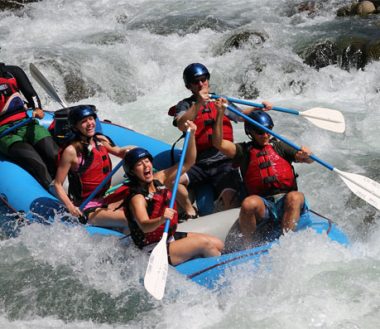
From the thundering whitewater of the Pacuare River to the wildlife-draped canopy trails of Manuel Antonio National Park, Costa Rica delivers the kind of shared experiences that families talk about for decades.
Costa Rica Rios has been crafting exceptional Costa Rica family vacations since 1995. As a family-run, multisport adventure company, every package is designed around one core belief: the right trip doesn’t just entertain kids and parents separately. It brings them together in moments that neither generation forgets.
Why Families Choose Costa Rica Above Every Other Destination
 Ecological Richness
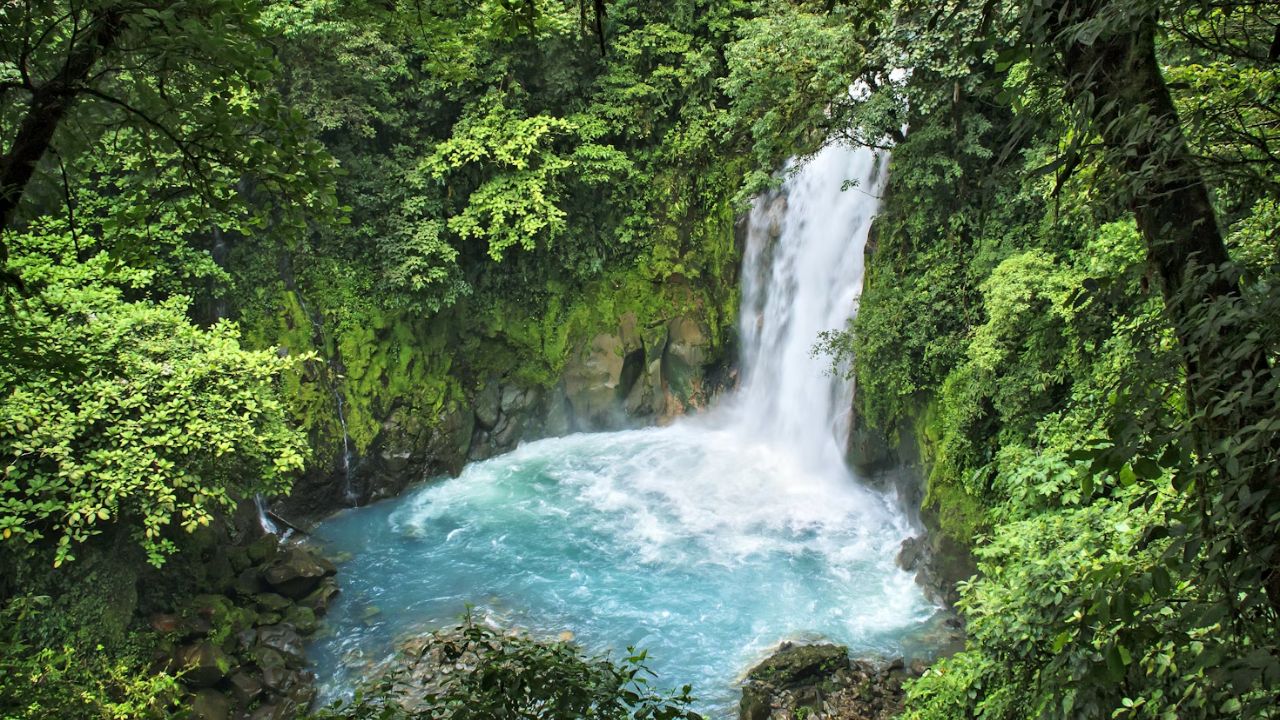
Costa Rica protects over 25 percent of its land through national parks, wildlife refuges, and biological reserves, making it one of the most ecologically protected nations worldwide. Despite covering less than 0.03 percent of the planet’s surface, it is home to approximately five percent of global biodiversity. For families, this translates into everyday encounters with sloths overhead during hikes, scarlet macaws near breakfast tables, and multiple monkey species crossing paths in a single afternoon.
Safety and Ease
Costa Rica disbanded its military in 1948, redirecting funds into education and healthcare. It consistently ranks as the safest country in Central America and among the safest in Latin America. Education through university is free, resulting in widespread bilingualism—many locals speak fluent English alongside Spanish. Private clinics and bilingual healthcare facilities are readily available in popular tourist regions, adding reassurance for families.
Family-Centered Culture
The national ethos of Pura Vida (“pure life”) embodies warmth, slower living, and a family-first mindset. Children are treated with genuine affection across the country. Restaurants provide high chairs without request, and tour guides naturally pace activities to accommodate younger travelers. This cultural orientation removes much of the friction families often face when traveling internationally.
Costa Rica also sits within a few hours of most major US airports, with direct flights available from cities including New York, Miami, Houston, Los Angeles, Atlanta, and Dallas. The proximity makes it one of the very few tropical destinations where a family can have a meaningful experience even on a shorter school break schedule.
Adventures for All Ages and Interests
From heart-pounding white-water rafting to peaceful wildlife boat tours, Costa Rica’s varied landscapes offer something for every type. Families can trek to stunning waterfalls, swim in sparkling natural pools, and wander through picturesque villages for real cultural experiences. Each adventure is an opportunity to connect with the natural world and experience more of this lively nation’s people and customs.
Stays with Comfort and Local Charm
Costa Rica accommodations blend ease with genuine authenticity. Lodges and hotels suitable for families are surrounded by nature, providing tropical bird sounds during mornings and star-filled nights. Amenities cater to families, providing a pleasant stay for visitors of all ages.
Best Destinations for Costa Rica Family Vacations
One of the most frequently asked questions families bring to Costa Rica Rios is simple: where should the trip be based? Costa Rica is roughly the size of West Virginia, but its interior mountain roads are winding and distances take longer than a map suggests. Dividing a family trip between two distinct regions is the approach that consistently produces the most satisfying results.
A rainforest or volcano experience in the first half combined with a beach finish in the second half gives every family member something to look forward to, and the contrast between the two settings makes the trip feel genuinely larger than its duration.
Arenal Volcano and La Fortuna
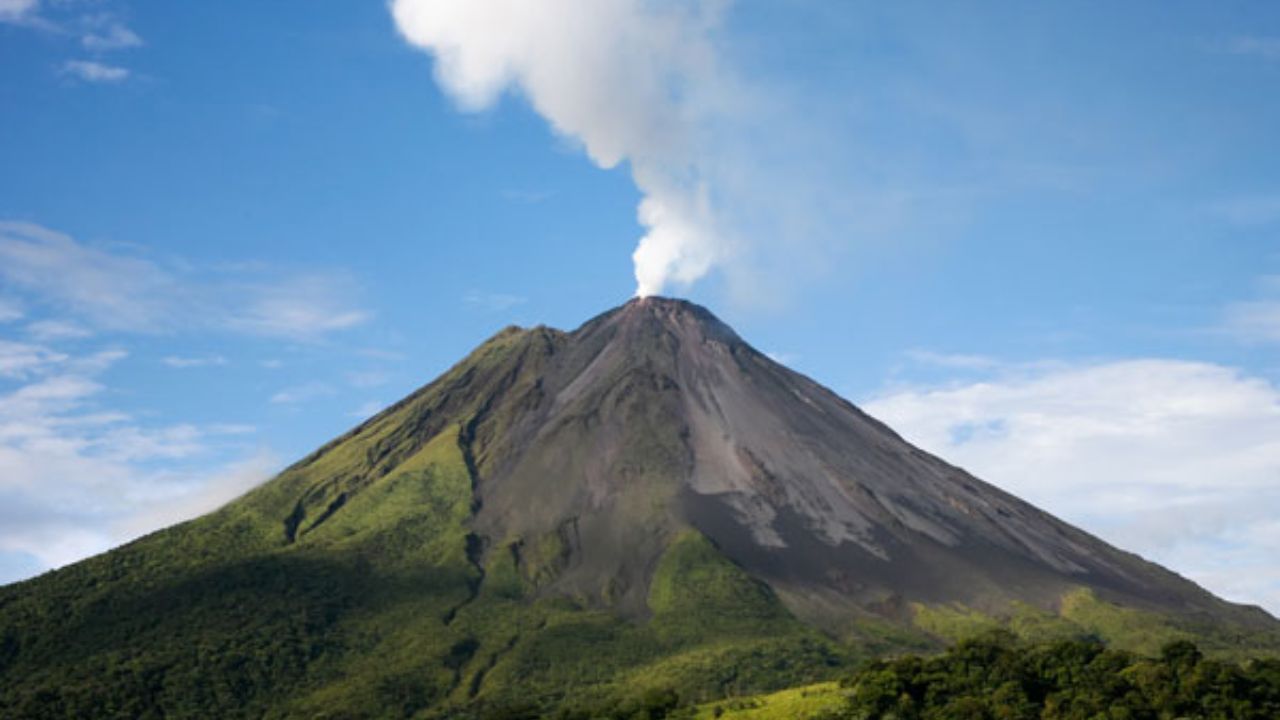
Arenal is the adventure capital of Costa Rica, and for good reason. The region sits at the base of the Arenal Volcano, one of the most active and visually dramatic volcanoes in the Western Hemisphere.
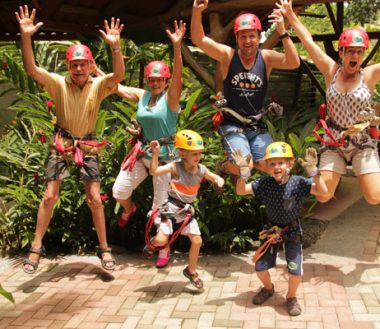
Families here wake to views of a perfect cone rising above tropical forest, spend their days zip-lining across nearly two miles of cables through the rainforest canopy, and soak in natural hot spring pools fed by geothermal activity beneath the volcano after dinner.
The hanging bridges of the Arenal Volcano National Park offer a world-class wildlife observation experience at canopy height, with guaranteed encounters with howler monkeys, toucans, poison dart frogs, and coatis. Safari floats along the Penas Blancas River give younger children calm water wildlife watching.
For older kids and teenagers, canyoning, waterfall rappelling, and mountain biking push the adventure further. La Fortuna Waterfall, a 75-meter cascade accessible via a moderately strenuous hike, is among the most memorable stops in the country for families of all ages.
For a deeper dive into every activity, trail, and hotel in this region, the complete guide to visiting Arenal Volcano covers everything families need before they arrive.
Manuel Antonio
Manuel Antonio combines the country’s most visited national park with some of its most family-friendly beaches in one compact location. The national park itself protects 4,000 hectares of coastal rainforest and 136,000 acres of marine reserve, and it is the one location in Costa Rica where families can nearly guarantee seeing all four species of Costa Rican monkeys; white-faced capuchin, howler, spider, and squirrel.
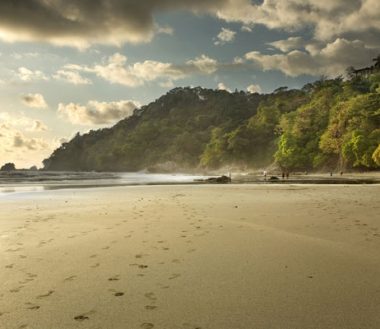
Guided hikes through the park connect directly to the pristine white sand of Playa Espadilla Sur, where the protected bay keeps ocean conditions calm enough for young children. Jet ski tours along the Pacific coastline, surf lessons for beginners, kayaking, and snorkeling fill the afternoons. The accommodation options in Manuel Antonio range from jungle-view boutique lodges to full-service resorts with pools and restaurants, all within minutes of the park entrance.
Monteverde and the Cloud Forest
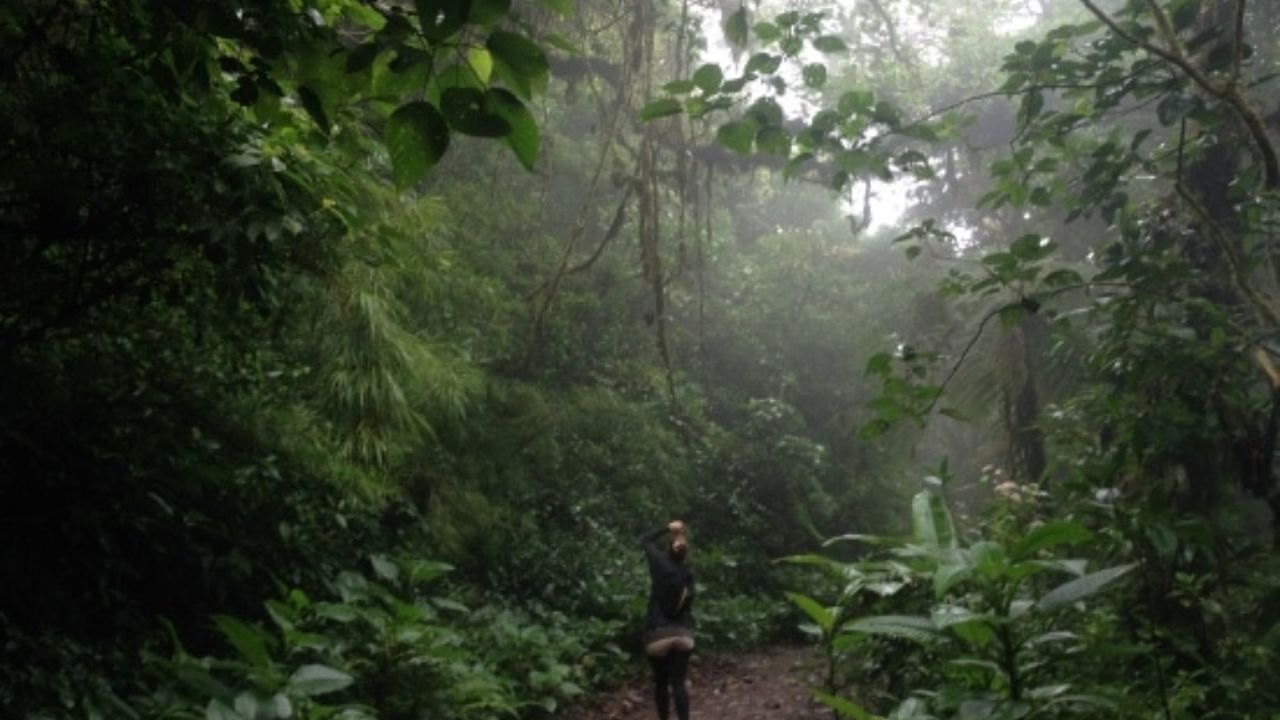
Monteverde sits at approximately 1,400 meters above sea level in the Tilaran Mountain Range, and the difference from lower-elevation Costa Rica is immediate.
The cloud forest here is a separate ecosystem entirely, perpetually misted and dense with rare orchids, resplendent quetzals, glass frogs, and over 400 bird species. The Monteverde Cloud Forest Reserve and the adjacent Santa Elena Reserve together protect one of the most biodiverse cloud forest ecosystems remaining in Central America.
The original zip-line canopy tour concept was pioneered in Monteverde, and the infrastructure built since then includes everything from beginner-level Tarzan swing platforms to multi-hour full canopy adventure experiences. Night hikes reveal a completely different cast of wildlife. Families with a strong interest in ecology and conservation find Monteverde’s educational depth particularly rewarding.
Guanacaste and the Pacific Coast Beaches

Guanacaste province in northwestern Costa Rica provides the closest thing to a classic tropical beach vacation on the Pacific coast, with the added advantage of being accessible through the Liberia International Airport (LIR) without transiting through San José.
The dry season in Guanacaste runs reliably from November through April, producing long stretches of sunny blue-sky days that are ideal for families planning their first Costa Rica trip. Playa Conchal is one of the most beautiful family beaches in the country, composed partly of crushed shells that give the water a luminous turquoise quality.
Tamarindo offers surf lessons calibrated perfectly for beginners, catamaran sunset cruises, and a relaxed beach town atmosphere that suits families looking to decompress. The Rincon de la Vieja National Park near Liberia adds volcanic mud pots, waterfalls, and horseback riding to the Guanacaste itinerary for families who want activity alongside their beach days.
Tortuguero
Tortuguero is accessible only by boat or small plane, and that remoteness is precisely its appeal. This Caribbean coastal park is one of the most important sea turtle nesting sites in the Western Hemisphere. Between July and October, green sea turtles arrive in extraordinary numbers to nest on Tortuguero’s dark volcanic sand beaches.
Guided nighttime nesting tours, conducted under strict conservation protocols with certified guides, represent one of the most profound wildlife experiences available anywhere on the planet.
The network of canals running through the park supports extraordinary biodiversity including caimans, river otters, three-toed sloths, manatees, and hundreds of bird species. For families with children who have any interest in marine biology, ecology, or conservation, Tortuguero is transformative.
Families researching this destination in more depth will find the 7 best things to do in Tortuguero an invaluable planning resource before the trip.
Costa Rica Family Vacation Activities by Age Group
One of the defining strengths of Costa Rica as a family destination is the genuine range of activities available across all age groups. This is not a destination that separates adult fun from children’s activities. The country’s natural environment is entertainment, and that environment scales across ages naturally.
Young Children Ages 5 to 10
This age group tends to thrive most with activities that are visually rich, moderately physical, and centered on wildlife discovery. Safari floats on calm rivers like the Penas Blancas or Tarcoles are ideal introductions to Costa Rica’s wildlife for young children.
The pace is relaxed, the wildlife encounters are outstanding, and there is no physical demand. Manuel Antonio National Park guided hikes operate at a pace that works for younger legs while delivering nearly guaranteed monkey and sloth sightings.
La Paz Waterfall Gardens near the Central Valley gives children close encounters with toucans, hummingbirds, poison dart frogs, and jaguars in a structured, safe environment. Hot spring pools at resorts near Arenal are universally beloved by young children. Horseback riding is available at multiple properties throughout the country and can be calibrated to a beginner pace. Many tour operators include naturalist guides who are parents themselves and naturally adjust to younger audiences.
Tweens Ages 11 to 14
Children in this age range are typically ready for the full adventure portfolio Costa Rica offers. Zip-lining through the rainforest canopy, specifically the long multi-cable circuits at Arenal and Monteverde, produces a level of excitement that this age group responds to powerfully. The Arenal Volcano hanging bridge trail at canopy height covers over three kilometers and delivers a sense of genuine jungle immersion.
Waterfall rappelling near La Fortuna, where guided descents down active waterfalls are conducted with full safety equipment, is appropriate for this age group. Class II and Class III whitewater rafting on rivers like the Sarapiqui introduces the group adventure dynamic in a way that genuinely builds confidence.
Snorkeling in the clear Pacific waters off Manuel Antonio, kayaking along coastal mangrove systems, and surfing lessons in beginner-friendly breaks like Tamarindo or Playa Hermosa are all appropriate and highly engaging for this age group.
Teenagers
Teenagers in Costa Rica frequently describe their trip as one of the best experiences of their lives, and the reason is simple: the country treats them as capable of real adventure. Full whitewater rafting on Class III and Class IV rivers including the Pacuare, widely regarded as one of the top whitewater rivers in the world, is appropriate for confident teens. Canyoning, which involves rappelling down multiple waterfalls in sequence through a jungle gorge, is the activity that most consistently earns superlatives from this age group.
Mountain biking through the Arenal region, multi-day sea kayaking along the Pacific coast, deep sea sport fishing, and stand-up paddleboarding on Lake Arenal are all available and appropriately calibrated for teenagers. The overnight experience at remote eco-lodges, including the Pacuare River eco-lodge accessible only by raft, is particularly impactful for teenagers who engage with sustainability and environmental issues.
A Sample 7-Day Costa Rica Family Itinerary
The following itinerary represents one of the most consistently successful structures for a Costa Rica family vacation, combining Arenal and Manuel Antonio across seven nights. This framework can be customized entirely based on a family’s age range, activity preferences, and budget.
Day 1: Arrival into San José
Families arrive at Juan Santamaría International Airport (SJO) in San José. A private shuttle transfers the group directly to La Fortuna in the Arenal region, a journey of approximately three to four hours depending on traffic. Evening arrival at the resort is followed by dinner and a first soak in the natural hot springs. The drive itself passes through Costa Rica’s Central Valley and into increasingly dramatic mountain scenery.
Day 2: Arenal Volcano and Hanging Bridges
The morning is spent on the Arenal Volcano National Park hanging bridges trail, a 3.2-kilometer loop at canopy height with suspended bridges crossing the jungle interior. Naturalist guides identify wildlife along the route. The afternoon is reserved for the Arenal zip-line circuit, covering multiple cables with views over the forest and lake below. A second evening at the hot springs concludes the day.
Day 3: Whitewater Rafting the Sarapiqui or Toro River
Class II to III whitewater rafting on rivers adjacent to the Arenal region introduces the group adventure experience that families repeatedly cite as a trip highlight. The rivers run through pristine jungle corridors with regular wildlife sightings. This activity is appropriate for children from approximately eight years and older. Calmer float alternatives are available for families with younger children.
Day 4: Transfer to Manuel Antonio
The private shuttle journey from Arenal to Manuel Antonio covers approximately four hours through the country’s interior, passing through agricultural valleys, mountain passes, and the Tárcoles River bridge where American crocodiles are visible from above in numbers. Arrival in Manuel Antonio in the afternoon leaves time to settle into the resort and explore the beach before sunset.
Day 5: Manuel Antonio National Park
A guided morning hike through the national park covers the primary wildlife trails leading to Playa Espadilla Sur and Playa Manuel Antonio. Expert naturalist guides dramatically increase the number of wildlife sightings, pointing out species that are nearly invisible to untrained eyes including sleeping bats, sleeping sloths tucked into tree forks, and the tiny squirrel monkeys that move in large groups through the canopy. The afternoon is free time on the beach.
Day 6: Ocean Activities and Leisure
Options on this day include a catamaran snorkeling tour along the coast, a jet ski tour, surf lessons on the beach, kayaking through the mangrove estuary at the edge of the park, or simply a day of rest and beach time. Families with teenagers typically gravitate toward the more active options. Families with young children find the protected Manuel Antonio beach perfect for a low-key water day.
Day 7: Departure
Private shuttle from Manuel Antonio to San José airport, timed to departure flights. The journey takes approximately three to three and a half hours, allowing time for any last grocery stops for coffee, chocolate, or local crafts.
Practical Information for Families Planning a Costa Rica Trip
Best Time to Visit Costa Rica With Kids
Costa Rica operates on two primary seasons. The dry season, running from December through April, brings consistently sunny weather across the Pacific coast and the Central Valley. This is the most popular period for families from the United States and Canada, particularly around the holidays and spring break.
Accommodations fill up significantly during December 20 through January 5 and during March and April spring break windows, making advance booking of at least four to six months advisable during those periods.
The green season, running from May through November, brings afternoon rainfall that typically clears by evening. This period offers several meaningful advantages for families: accommodation prices are considerably lower, crowds at national parks and popular beaches are thinner, and the flora and fauna are at their most vivid and abundant.
The green season is also when sea turtles nest at Tortuguero and on the Pacific coast. Families flexible with weather will find the green season an excellent value proposition. August through October brings the heaviest rainfall, particularly on the Caribbean side. November and May are considered shoulder months and often represent the ideal balance of good weather, manageable crowds, and reasonable pricing.
Is Costa Rica Safe for Families With Children?
Costa Rica is the safest country in Central America and consistently among the safest in Latin America according to international safety indices. The country has no military and invests heavily in education, healthcare, and infrastructure.
Violent crime rates in tourist regions are very low. The primary safety considerations for families are the same as in any tropical destination: sun protection, hydration, appropriate insect repellent, and awareness of ocean conditions at specific beaches.
Activity operators in Costa Rica are regulated under standards that align with US and international safety requirements. Helmets, life jackets, harness systems, and guide certifications are taken seriously across the reputable tour operator community.
Water and Food Safety
Tap water in Costa Rica is safe to drink in most parts of the country, including San José and the major tourist regions.
Costa Rica has made substantial infrastructure investment in water quality as part of its broader environmental commitments, and it is one of the few Central American countries where travelers can safely drink tap water without concern. Bringing a reusable water bottle is strongly recommended both for convenience and environmental alignment with the country’s sustainability values.
Food safety concerns are minimal in established restaurants and hotels. Street food from reputable vendors is generally safe and worth experiencing.
Getting Around With Children
Private shuttle transportation is the most comfortable and recommended option for families traveling with children in Costa Rica. Roads in rural areas and between popular destinations are frequently unpaved, can require four-wheel drive during the green season, and are often winding and slow by distance-relative measures. What appears to be a 60-kilometer journey on a map can take two to three hours by road.
Private shuttles eliminate navigation stress, include comfortable vehicles appropriate for groups and luggage, and connect families directly between hotels and activities. Domestic flights between San José and regional airports in Quepos (Manuel Antonio), Liberia (Guanacaste), Palmar Sur (Osa Peninsula), and Tortuguero dramatically reduce travel time between distant regions and are worth budgeting for longer or more ambitious itineraries.
What to Pack for a Costa Rica Family Vacation
Lightweight, moisture-wicking clothing is the foundation of a practical Costa Rica packing list for families. Waterproof rain jackets are essential year-round in forested regions like Monteverde and Arenal. Sturdy closed-toe hiking shoes or trail runners are far more practical than sandals for any park hikes. Water shoes are useful for river activities and rocky beach entries.
High-SPF reef-safe sunscreen, DEET-based insect repellent, and after-sun lotion should be packed in sufficient quantity for the trip duration. Small daypacks are practical for carrying water, snacks, and cameras during activities. Binoculars significantly enhance the wildlife observation experience for both children and adults.
Tipping Culture
A 13 percent sales tax and a 10 percent service charge are typically included in restaurant bills in Costa Rica. When a service charge is not included, tipping 10 to 15 percent is customary. Tour guides are tipped separately and expect approximately $5 to $10 USD per person per day. Driver tips are typically $3 to $5 USD per person for longer transfers. Tipping in US dollars is widely accepted throughout Costa Rica.
Currency
Costa Rica’s currency is the Costa Rican Colon, but US dollars are accepted virtually everywhere in tourist regions at competitive exchange rates. Credit cards are accepted at hotels, established restaurants, and most tour operators. Carrying a moderate amount of cash in small denominations is practical for tips, local markets, and smaller purchases.
How Much Does a Costa Rica Family Vacation Cost?
Budget planning for a Costa Rica family vacation depends on travel style, family size, time of year, and the balance between guided packages and independent travel. A general framework for a 7-night all-inclusive guided family vacation package from Costa Rica Rios typically encompasses accommodations at quality family-friendly properties, all private shuttle transportation, activities and tours, most meals, guide services, and 24-hour in-country support.
Families traveling during dry season peak periods, particularly the holiday window and spring break, should expect higher accommodation rates and limited availability at top properties. Booking five to six months in advance is strongly advisable for December and March-April travel. Green season travel can produce cost savings of 20 to 40 percent on accommodations at many properties without substantially compromising the experience.
All-inclusive adventure packages with Costa Rica Rios remove the cognitive overhead of managing logistics independently, which families consistently cite as one of the most valuable aspects of the booking experience.
Knowing that airport transfers, inter-hotel shuttles, activity scheduling, guide quality, and accommodation standards have all been vetted by specialists removes an entire category of travel stress that compounds when traveling with children.
What Families Say About Costa Rica Rios
Costa Rica Rios has planned family trips across every combination of ages imaginable, from multi-generational groups spanning grandparents in their seventies and grandchildren as young as eight, to solo parents navigating an adventurous week with teenagers.
The consistent feedback centers on three things: the quality of the local guides, the reliability of logistics, and the ease of customization.
Families appreciate that the planning process starts with a conversation about who is traveling and what matters most to them. A family with a nine-year-old who is obsessed with wildlife and a fourteen-year-old who wants maximum adrenaline gets a different itinerary than a multigenerational group balancing grandparents’ physical comfort with teenagers’ energy.
That calibration is the core of what Costa Rica Rios has refined across nearly three decades of operation.
Frequently Asked Questions About Costa Rica Family Vacations
Is Costa Rica a good vacation destination for families with very young children?
Costa Rica is appropriate for children of all ages, though the ideal experience shifts based on age. Families with toddlers and children under five will find the most comfort at resort-based stays where pools, gentle wildlife observation, and relaxed beach environments form the primary experience. National park hikes, hot spring soaks, and safari floats work well for young children. Activity-intensive programs are better suited to children five and older.
What is the best age to take kids to Costa Rica?
There is no single best age, but families consistently report that children between eight and sixteen have the most immediately engaged and enthusiastic responses to Costa Rica’s adventure offerings.
Children in this range are physically ready for whitewater rafting, zip-lining, and longer hikes, and are old enough to absorb and remember the ecological depth of what they are experiencing. That said, families with children across a wide range of ages regularly report that Costa Rica succeeds in engaging everyone simultaneously, which is rare for any single destination.
Do families need a travel agent or tour operator to visit Costa Rica?
Families can arrange independent travel to Costa Rica, but the logistical complexity of coordinating inter-regional transportation, activity bookings, accommodation quality control, and guide expertise across two or three destinations simultaneously is significant.
Independent travelers frequently underestimate travel times between destinations and overestimate the ease of finding available, high-quality guides on short notice at popular sites. Working with a specialist operator like Costa Rica Rios means every transfer, hotel, activity, and guide has been vetted specifically for family travel.
How long should a Costa Rica family vacation be?
Seven to ten nights is the range that allows a family to experience two distinct regions meaningfully without feeling rushed. Seven nights with four nights in one region and three in another is a common and effective structure.
Ten to fourteen nights opens up three-region itineraries that might include Arenal, Monteverde, and the Pacific coast, or add the Caribbean coast and Tortuguero to a Pacific-centered trip. Families with only five or six nights available can still have a deeply satisfying experience by focusing on a single region with deep activity immersion rather than attempting regional variety.
What documents are required for US citizens traveling to Costa Rica with children?
US citizens traveling to Costa Rica do not require a visa for stays of up to 90 days. A valid US passport is required for all travelers, including children. There is no minimum passport validity requirement beyond being valid for the duration of the stay, though a margin of at least six months is always advisable.
Children traveling with only one parent should carry a notarized letter of consent from the non-traveling parent. Costa Rican immigration officers do check entry documentation and have been known to question single-parent travelers without appropriate documentation.
When should a Costa Rica family vacation be booked?
For travel during the dry season peak windows, particularly December 20 through January 10 and mid-March through mid-April, booking five to six months in advance is strongly recommended.
Top family-friendly properties and the most experienced guides book out early during these periods. Green season travel allows for shorter booking lead times, though popular eco-lodges and remote properties in areas like Tortuguero and the Osa Peninsula fill up well in advance regardless of season.
Stress-Free Vacation Planning
Planning a trip for the whole family can be overwhelming, but Costa Rica family vacations are easily customized to match your pace, preferences, and comfort level. With transportation, activities, and accommodations coordinated in advance, you can focus on enjoying quality time together.
Create Memories That Last a Lifetime
Costa Rica family vacations are more than just holidays—they are opportunities to bond, explore, and experience the world together. Every laugh, story, and shared adventure becomes part of your family’s story. At Costa Rica Rios—Adventure Vacations, we create tailored itineraries that bring these moments to life, ensuring your family’s journey is filled with connection, discovery, and memories that last a lifetime.