

Locating the Best Costa Rica Scuba Diving Sites

Costa Rica is one of the most biodiverse countries in the Americas, and that extends well below the waterline. With coastline on both the Pacific and the Caribbean, the country offers a range of dive experiences that few destinations in the region can match.
From the hammerhead-packed depths of Cocos Island to the sheltered beginner reefs at Playa del Coco, Costa Rica scuba diving spans every skill level and every budget.
Not only do phenomenal dive sites abound, but the sheer variety of every other activity available, like zip-lining, volcano climbing, jungle trekking and white water rafting, means that visitors can land in Costa Rica just a few hours after leaving home and have a near-endless choice of experiences right at hand.
This guide covers the top dive sites, the best season to visit each one, how to reach them, what experience level they require, and what the trip costs from start to finish.
Costa Rica’s Underwater World: a Treasured Highlight
 Costa Rica is renowned as one of the most bio-diverse nations on earth and the wilderness and wildlife abundance certainly doesn’t stop at its pristine sandy shores. Below the surface of the crystalline seas, Costa Rica is an incredibly colorful, fertile and vibrant world, brimming with amazing creatures.
The land of turtles, dolphins and whales, Costa Rica’s waters hide moray eels, sharks, sting and manta rays, soft and hard coral, angel fish, octopus, snappers, grunts, and simply thousands of species of multi-colored tropical fish. Every season serves up a different scene, every day a kaleidoscope of new discoveries. Whether you head to the more famous and best developed Pacific side or the lesser-visited Caribbean side, you’ll find amazing diving and snorkeling sites abounding.
Best Time for SCUBA diving in Costa Rica
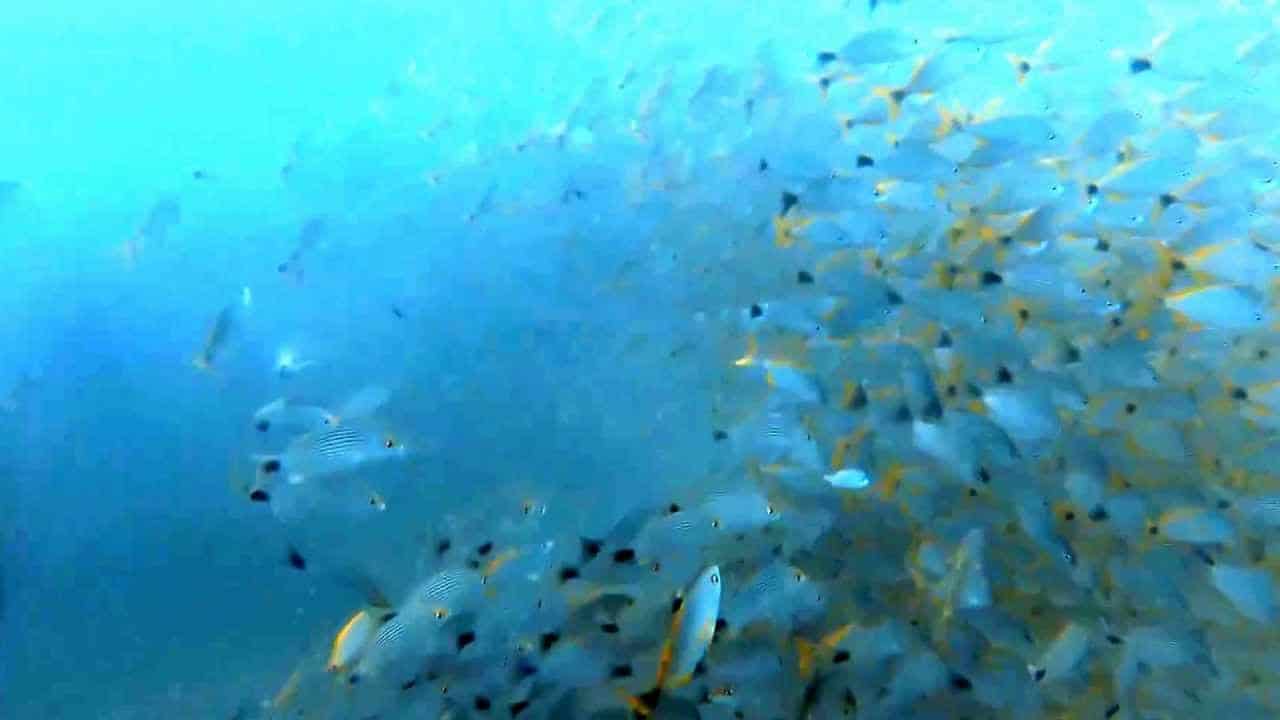
No single month is the definitive answer for all sites. The best time depends on which site is on the itinerary and what type of encounter matters most.
Pacific Coast: Dry Season (November to May): The Pacific dry season delivers calm seas, extended visibility and water temperatures between 70 and 86 degrees Fahrenheit. Visibility on many sites stretches to 100 feet or beyond. Manta rays arrive at the Catalina Islands in numbers between November and May. This window is the most popular and suits every experience level.
Pacific Coast: Rainy Season (June to November): The rainy season draws larger pelagic species in through nutrient-rich upwellings. This is hammerhead season at Cocos Island, running June through November. Bull sharks concentrate at the Bat Islands during the same period. Visibility drops at some spots due to river runoff, but the marine encounters more than compensate. Advanced divers tend to favor this period for the sheer scale of what shows up.
Caribbean Coast: The Caribbean coast runs on its own rhythm. September and October bring the clearest water and calmest conditions on the Caribbean side. Reef diving at Cahuita National Park is at its best during these two months. Outside that window, conditions vary, but the shallow reefs remain accessible and rewarding.
A 3mm wetsuit is recommended year-round. Thermoclines are common on the Pacific side, particularly at deeper sites during the dry season months.
Best Diving spots in Costa Rica
#1 Cocos Island
The UNESCO listed Cocos is, without a doubt, the best and most popular diving site in the entire country. Just 300 miles off the western coast, and part of the Puntarenas Province, the Cocos is a fiercely protected island with only Park Rangers allowed as inhabitants.
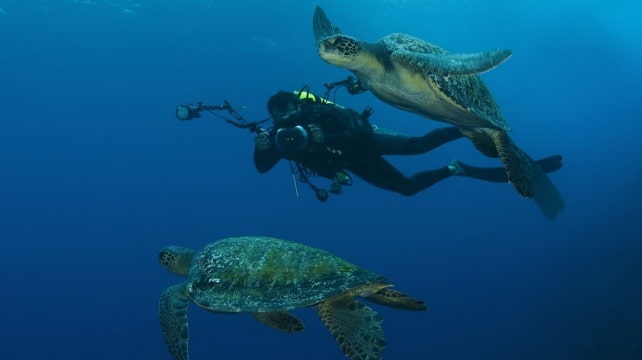
Particularly revered as a breeding ground for hammerhead sharks, dolphins and rays, among many other species, this is one of the world’s top 10 diving meccas and a must-include in any diver’s itinerary to Costa Rica. Due to the very unique geographical location, Cocos is inherently different to its southern ‘cousins’ the Galapagos, offering a much more luscious landscape along with an array of marine life. Jacques Cousteau himself called this “the most beautiful island in the world” and hammerheads agree: the largest schools of such sharks ever recorded in the world, have congregated right here. The Cocos is reachable on liveaboard boat excursions.
The island holds roughly 20 dive sites. These range from shallow coral gardens to steep wall dives, deep pinnacles and strong drift dives.
Notable sites include Manuelita Coral Garden at depths of 20 to 70 feet, ideal for macro divers; Submerged Rock, a pinnacle with a swim-through arch at 50 to 70 feet that serves as a nursery for white-tipped sharks; and Dirty Rock (Roca Sucia), which draws the highest concentrations of pelagic sharks on the island. The best time for sharks is July through September. Dry season months, December through May, offer calmer surface conditions and the longest visibility.
Water temperature at Cocos ranges from 79 to 84 degrees Fahrenheit, with occasional thermoclines at depth.
Cocos Island is for experienced divers only. Strong currents, significant depths and open ocean conditions require solid buoyancy control and a logged dive history. Liveaboard spots fill months in advance. This is not a site to plan at the last minute.
#2 Gulf of Papagayo
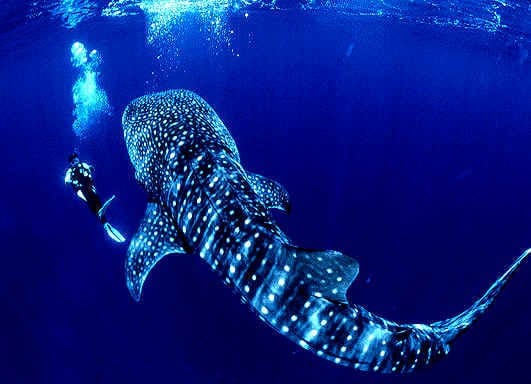
The Gulf of Papagayo holds close to 50 dive sites and serves as one of Costa Rica’s most accessible Pacific diving hubs. White-tipped sharks and spotted eagle rays draw the most attention.
Volcanic rock formations spread across the gulf create refuge for eels, octopus, rays and dense populations of tropical fish. Both deep and shallow dives are available here, which makes the gulf a strong choice for groups with mixed experience levels.
The proximity of Papagayo to the Liberia International Airport makes it one of the easiest Pacific zones to reach. Day trips depart from multiple beach towns within the gulf, and most operators run two-tank dives covering the full morning.
#3 Catalina Islands
The Catalina Islands sit off the northwest Pacific coast, accessible by day trip from both Tamarindo and Playa del Coco. Around 20 rocky islands make up the chain, with roughly 30 dive sites spread across it. Six are explored on most trips. The most visited include Roca Elefante, Los Sombreros and La Pared, each offering a different underwater profile from the others.
The Catalinas are best known for giant oceanic manta rays. Between November and May, the rays appear in concentrated numbers around the islands. From September through March, the site also produces whale shark sightings, tiger shark encounters and large dolphin pods. Spotted eagle rays, white-tipped reef sharks and bull sharks are present throughout the year. Schools of tropical fish are thick across the entire site.
Strong currents and depths reaching around 90 feet make the Catalinas a destination for open-water certified divers and above. Beginners should confirm with their operator that surface conditions on the day are manageable before booking.
The boat ride from Playa del Coco takes 30 to 60 minutes depending on the departure point. Most operators run two-tank dives structured as full-day excursions.
#4 Bat Islands (Isla Murcielagos)
The Bat Islands sit in the northwestern corner of Costa Rica inside the Santa Rosa National Park in Guanacaste Province, about 90 minutes by boat from Playa del Coco. This is Costa Rica’s premier bull shark site. No other location in the country comes close for concentrated shark encounters.
The most visited dive site here is Gran Susto, known in English as “The Big Scare.” Bull sharks as large as 23 feet have been recorded at the outermost island walls.
During peak season from May through November, encounters with multiple bull sharks on a single dive are a regular occurrence rather than an exception. Strong currents, depths over 100 feet and open ocean conditions classify this as an advanced site only. It is not appropriate for divers still building experience.
Water temperature at the Bat Islands ranges from 75 to 79 degrees Fahrenheit. Beyond bull sharks, divers encounter schooling devil rays, manta rays and large numbers of tropical fish across the reef walls. The Bat Islands works well as part of a broader northern Pacific itinerary, since both the Catalina Islands and the Bat Islands are reachable on separate days from a base in Playa del Coco.
#5 Cano Island
Cano Island sits off the southwestern Pacific coast on the Osa Peninsula, approximately 30 minutes by boat from Drake Bay and 90 minutes from Uvita. As a protected biological reserve, entry is strictly managed.
Only five designated dive sites exist within the reserve, with a limit of ten divers permitted in the water at any time. That restriction keeps the marine ecosystem in exceptional condition.
Named dive sites include El Bajo del Diablo (Devil’s Rock), where manta rays, bull sharks and nurse sharks move through towering rocky pinnacles and canyons; and Paraiso (Paradise), a volcanic lava formation where blue and gold snappers gather in schools of thousands while barracuda circle above looking for a meal.
Whale sharks are a seasonal possibility. Humpback whales pass through the area from July through October and from January through early March, making Cano Island one of the few sites where whale shark and humpback encounters can happen on the same trip. Stingrays, sea turtles and eels round out what is a consistently productive site.
Cano Island is suitable for intermediate and advanced divers. Moderate currents at some of the main sites mean it is not an ideal starting point for open-water beginners. Snorkeling here is equally rewarding, which makes it a strong choice for groups where not everyone is certified.
#6 Playa Hermosa and Playa del Coco
Have only a few days available or wish to get certified? Then these two spots are ideal for you. The perfect short break destinations, these two beaches may offer limited depth and visibility, yet this makes them ideal for learners and those who don’t wish nor have time to head out to faraway islands. One of the country’s most popular seaside hubs, Playas Hermosa and Cocos are just 10 miles from the Liberia Airport in Guanacaste Province, and just 3.5hr drive from San Jose.
Depths and visibility here are more modest than the offshore island sites. That is precisely what makes them ideal for learners. Certification courses run throughout the year, conditions are forgiving, and the reefs around both beaches hold white-tipped reef sharks, southern stingrays, eagle rays and turtles.
Playa del Coco also functions as the main staging point for day trips out to both the Bat Islands and the Catalina Islands. Staying in the town gives access to three separate dive zones without changing base.
#7 Cahuita National Park
Cahuita sits on the southeastern Caribbean coast and offers a completely different type of Costa Rica diving compared to the Pacific sites. The reef at Cahuita is the largest living coral reef on the country’s Caribbean coastline, supporting close to 40 species of coral, hundreds of mollusks and a dense population of colorful reef fish.
The waters off Puerto Viejo are quiet, rich with sea life and a strong complement to any adventure trip along the east coast.
Caribbean diving at Cahuita suits beginner divers well. The reef acts as a natural barrier that reduces current and swell, making conditions calmer than anything on the Pacific side. More experienced divers will find uncharted water beyond the main reef sections.
Guided excursions operate from Puerto Viejo, the nearest town with consistent dive infrastructure. September and October are the peak months for visibility on this coast.
Do You Need Certification to Scuba Dive in Costa Rica?
Certification is not required to try scuba diving in Costa Rica. Most dive operators along the Pacific coast offer what is called a discovery dive, structured specifically for people without any diving experience.
The format is straightforward: one to two hours of pool instruction covering equipment use, buoyancy basics and hand signals, followed by two guided open-water tank dives at a nearby site. Maximum depth on a discovery dive is typically 12 meters or 40 feet. A certified instructor stays with the group throughout the entire dive.
For those ready to certify, the PADI Open Water course runs three to four days and includes classroom or online theory, pool sessions and four open-water dives.
Completing the theory modules online before arrival shortens the in-person portion to two to three days. Courses run in small groups at most major dive hubs including Playa del Coco, Tamarindo, Flamingo, Drake Bay and Uvita.
The minimum age for both discovery dives and certification courses is 10 years old. Advanced Open Water certification unlocks the full depth range at the Catalina Islands and is a baseline requirement for sites like the Bat Islands and Cocos Island.
Costa Rica Scuba Diving Cost Guide
| Type | Duration | Approximate Cost Per Person |
| Discovery Dive (no certification required) | 1 day | $135 to $200 |
| PADI Open Water Certification | 3 to 4 days | $400 to $550 |
| PADI Advanced Open Water | 2 to 3 days | $500 to $700 |
| Catalina Islands day trip (certified diver) | Full day | $135 to $160 |
| Cano Island day trip | Full day | $150 to $200 |
| Cocos Island liveaboard | 7 to 10 days | $3,000 to $6,000 and above |
Equipment rental is included in most dive packages. Carrying a personal mask and fins reduces rental costs on multi-day trips. For week-long dive itineraries, traveling with personal gear is worth the extra luggage.
How to Reach Each Dive Site
| Site | Nearest Airport | Access Type | Transfer Time |
| Cocos Island | San Jose (SJO) | Liveaboard from Puntarenas | 36 hours by sea |
| Bat Islands | Liberia (LIR) | Day trip from Playa del Coco | 90 minutes by boat |
| Catalina Islands | Liberia (LIR) | Day trip from Playa del Coco or Tamarindo | 30 to 60 minutes by boat |
| Gulf of Papagayo | Liberia (LIR) | Day trips from Papagayo area | 15 to 45 minutes by boat |
| Cano Island | San Jose (SJO) | Day trip from Drake Bay or Uvita | 30 minutes (Drake Bay) / 90 minutes (Uvita) |
| Playa del Coco | Liberia (LIR) | Direct road transfer | 30 minutes by car |
| Cahuita National Park | San Jose (SJO) | Drive to Puerto Viejo | 4 to 5 hours by road |
Both San Jose (Juan Santamaria International, SJO) and Liberia (Daniel Oduber International, LIR) have direct flights from major US cities. Northern Pacific sites are best accessed via Liberia. Southern Pacific and Caribbean sites route through San Jose.
Whether the goal is a bucket-list liveaboard to Cocos Island or a discovery dive off Playa del Coco, Costa Rica delivers diving that matches the ambition of whoever is in the water. Costa Rica Rios, recognized by National Geographic Adventure and Lonely Planet, has been building Costa Rica adventure itineraries since 1995. Add a scuba diving excursion to any trip plan and the experience on and off the water covers everything this country has to offer.
Frequently Asked Questions
When is the best time to scuba dive in Costa Rica?
For visibility and calm sea conditions on the Pacific, November through May is the strongest window. For large pelagic encounters, including hammerheads at Cocos Island and bull sharks at the Bat Islands, June through November delivers the most reliable sightings. The Caribbean coast peaks in September and October for visibility and calm conditions.
Do you need a scuba certification to dive in Costa Rica?
No. Discovery dives are available at most Pacific coast operators and require no prior experience. A certified instructor supervises throughout, and maximum depth is kept to 12 meters. To access the full depth range at most sites and to dive independently, PADI Open Water certification is required. The minimum age for both options is 10 years old.
What marine life can be seen while scuba diving in Costa Rica?
Pacific sites produce scalloped hammerhead sharks, bull sharks, whale sharks, giant oceanic manta rays, spotted eagle rays, white-tipped reef sharks, sea turtles, dolphins and humpback whales depending on the season. Caribbean sites at Cahuita and Puerto Viejo feature nurse sharks, parrotfish, seahorses, moray eels, angelfish and some of the most intact coral reef in Central America.
Is Cocos Island suitable for first-time divers?
No. Cocos Island is for experienced divers with a strong logged dive history. Strong currents, remote open-ocean conditions and significant depths require well-developed buoyancy control and real underwater experience. Divers new to the sport should build experience across other Costa Rica sites before considering Cocos Island as a destination.
How much does scuba diving cost in Costa Rica?
Discovery dives start at approximately $135 to $200 per person for the full day including equipment. PADI Open Water certification runs between $400 and $550 for the complete course. Day trips to the Catalina Islands and Cano Island sit between $135 and $200 depending on the operator and departure point. Cocos Island liveaboards start at approximately $3,000 for a 7-night expedition.
Can beginners scuba dive in Costa Rica?
Yes. Playa del Coco, Playa Hermosa, Tortuga Islands and Cahuita National Park are all well suited to beginners and new divers. Discovery dives at Playa del Coco and the Flamingo area are among the most popular introductory options, with pool instruction followed by two open-water tank dives at the Catalina Islands. PADI Open Water courses run year-round across all major Pacific hub towns.


