
10 Fascinating Facts About Costa Rica Rain Forests

Costa Rica takes up just 0.03% of the planet’s surface. That is a sliver of land smaller than the state of West Virginia. Yet within that sliver lives nearly 6% of all species known to exist on Earth. No other country of comparable size comes close to that ratio. The rainforests are the reason why.
They are not just scenery. They are the engine behind one of the most extraordinary concentrations of life found anywhere on the planet. Whether someone is visiting for the first time or returning for the tenth, understanding what these forests actually are and why they matter transforms a walk in the trees into something far more memorable.
Collectively, they harbor a colossal chunk of the biodiversity the planet needs to thrive, or between 40 and 75% of all biotic species. When in Costa Rica, you’ll be undoubtedly be planning a visit to some of the country’s phenomenal rain forests, so let us help tickly your curiosity with these 10 fascinating facts.
10 Costa Rica Rainforest Facts Worth Knowing Before You Go
1. Not All Rainforests Are the Same

Most people arrive in Costa Rica expecting one kind of rainforest. What they find is something far more layered than that.
Rain forests across the world are divided into two broad categories: tropical and temperate. Tropical rain forests sit between the Tropics of Cancer and Capricorn and are defined largely by how much rain falls on them, which averages around 66 inches per year at minimum but can push well beyond 200 inches in Costa Rica’s heaviest zones. Temperate rain forests grow in cooler parts of the globe, including parts of the Pacific Northwest in North America and stretches of coastal Chile.
Costa Rica sits firmly in tropical territory, but what makes it genuinely unusual is that within its tropical setting, it supports six distinct forest types. Visitors moving from the Caribbean coast to the Pacific highlands to the dry northwest are essentially traveling through entirely separate ecosystems, each with its own rainfall pattern, temperature range, tree species, and wildlife profile. That variety within such a compact geography is what keeps even seasoned naturalists coming back.
Local tip: Most first-time visitors head straight to Monteverde or Manuel Antonio. Both are extraordinary, but exploring a second forest type on the same trip reveals just how different the country’s ecosystems truly are.
2. Every Rainforest Is a Building With Four Floors
Standing at the entrance to a Costa Rican rainforest and looking up, the first impression is one of impenetrable green. But the forest is not a single undifferentiated mass. It is a vertical city, organized into four distinct layers, each functioning as its own habitat.
The forest floor is the bottom level, where very little sunlight reaches. The ground is covered in decomposing leaves, fallen branches, and dense root systems. This is where jaguars move silently, where tapirs forage, and where armies of leafcutter ants carry fragments of leaves along invisible highways that can stretch for hundreds of meters.
The understory sits above the forest floor. This is the eye-level world of ferns, shrubs, young trees, and the low-hanging vines that snake upward toward the light. Poison dart frogs and glass frogs live here, along with dozens of snake species and the majority of Costa Rica’s spider community.
The canopy is the roof of the forest. It is where the majority of wildlife activity happens, where howler monkeys sleep, where toucans nest, where sloths spend most of their lives barely moving among the high branches. The canopy intercepts most of the rainfall and sunlight before it reaches anything below.
Above the canopy, the emergent layer is where a handful of enormous individual trees break through the ceiling. These giants, some of them over 150 feet tall, are home to harpy eagles and large raptors surveying the forest from above.
Walking a canopy hanging bridge puts visitors directly inside the layer where the majority of rainforest life actually happens. That perspective, from inside the forest rather than looking up at it from below, is something that cannot be replicated from a ground-level trail.
3. More Than Half of Costa Rica Is Forest, and That Was Not Always True
Today, forests cover approximately 57% of Costa Rica’s land area. That number sounds encouraging, and it is. But the story behind it is what makes it remarkable.
In the 1940s, more than three-quarters of the country was blanketed in primary tropical forest. Over the following four decades, uncontrolled logging, cattle ranching expansion, and agricultural clearing stripped the landscape at one of the fastest deforestation rates recorded anywhere in the world.
By 1983, forest cover had collapsed to just 26% of the national territory. Species lost their habitat. Rivers silted up. The country that would become synonymous with ecological tourism was, at that moment, one of the most environmentally damaged nations in the Western Hemisphere.
What happened next is the part that matters.
Starting in the late 1980s, policymakers reversed direction. A national ban on unauthorized forest clearing was introduced in 1996. The following year, a Payments for Environmental Services program began compensating landowners directly for keeping forests intact, funded through a national fuel tax. Farmers who had cleared land for cattle found it financially worthwhile to let the forest grow back instead.
The result is that Costa Rica is now one of the only tropical nations in the world gaining more forest cover annually than it loses. That recovery earned the country the UN Champion of the Earth Award in 2019 and the Earthshot Prize in 2021, and it turned a country once known for destruction into the global template for what conservation policy can actually achieve.
The largest tropical rainforest in the world remains the Amazon, stretching across nine South American countries. Costa Rica’s forests are not the biggest. They are, acre for acre, among the most biologically dense anywhere on Earth.
4. These Forests Hold the Pharmacy the World Has Not Yet Opened
The medicinal potential of rainforest plants is not a vague, future possibility. It is an active and ongoing reality.
Roughly 70% of the plants currently used in cancer treatment worldwide originate from rainforest environments. Compounds found in plants like the rosy periwinkle transformed treatment for certain childhood leukemias. Rainforest-derived compounds are found in treatments for Hodgkin’s disease, breast cancer, and numerous other conditions.
The irony is that scientists have formally studied less than 1% of all known rainforest plant species for their medicinal properties. The remainder of the pharmacopeia is still out there, growing in places like Corcovado and Tortuguero, identified only by the communities and Indigenous groups who have used them for generations.
Each square mile of Costa Rican rainforest holds, on average, around 400 species of flowering plants and approximately 200 different tree species. Local communities, particularly the
Bribri and Cabécar peoples who have lived within these forests for centuries, have developed deep traditional knowledge of plants used to treat infections, wounds, fever, parasites, and digestive conditions. Plants like jackass bitters, tropical cilantro, and cacao have documented traditional uses that modern researchers are only beginning to verify through formal study.
This is one of the more concrete arguments for rainforest preservation that goes well beyond tourism or aesthetics. What has not yet been studied may matter enormously to medicine in the decades ahead.
5. Most of What Lives Here Has Never Been Formally Described by Science
Costa Rica is home to an estimated 500,000 species total. Of those, scientists have formally described and named only a fraction. The remainder are known to exist, their presence inferred from the scale of the ecosystem and the rate at which new species are discovered, but they have never been catalogued, named, or studied.
New species of insects, fungi, nematodes, and microorganisms are identified in Costa Rica on a near-continuous basis. In the Osa Peninsula alone, new amphibian and plant species have been documented in recent years that had never been recorded anywhere in scientific literature.
National Geographic named the Osa Peninsula the most biologically intense place on Earth, a designation based not on hyperbole but on the raw density of unique and undiscovered life per unit of land.
What that means in practical terms for a visitor is this: the frog on a branch during a night walk, the moth resting on a leaf, the beetle crossing the trail, any of them could belong to a species with no name yet given to it by anyone outside the forest itself.
6. The World Is Losing Rainforests. Costa Rica Chose a Different Direction.
Every single day, the world loses an area of rainforest equivalent to roughly 80,000 football fields. That loss does not stop on weekends or slow during climate summits. It is continuous and cumulative, driven by logging, cattle farming, palm oil production, and agricultural expansion across South America, Southeast Asia, and Central Africa.
Costa Rica made a deliberate choice to break from that trend. Through the conservation policies described above, through ecotourism investment, and through a national culture that came to see its forests as an economic asset rather than an obstacle to development, the country built a different model.
The forests that visitors walk through today exist in part because a generation of Costa Rican policymakers chose a path that almost no other developing nation at the time was willing to take.
That context gives every visit to a Costa Rican rainforest a weight that is worth appreciating. The forest did not survive by accident.
7. More Than a Billion People Depend on Rainforests to Survive
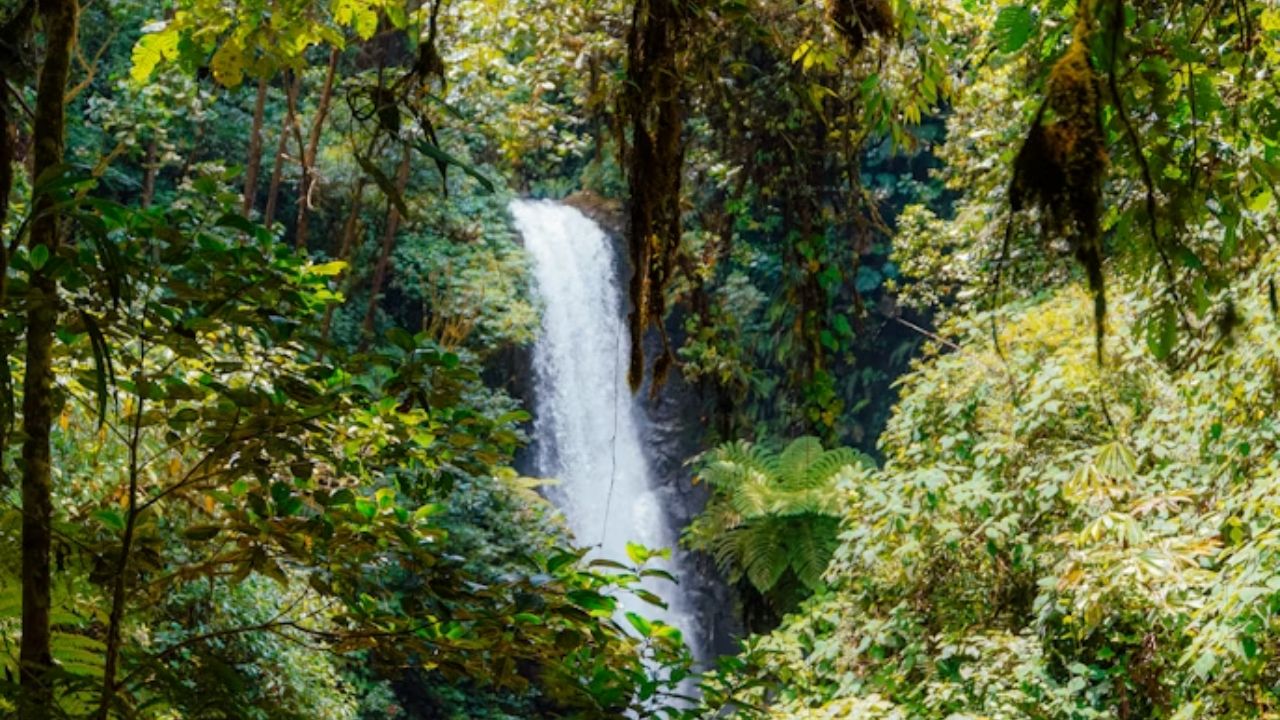
Worldwide, rainforests support the livelihoods of over 1.2 billion people living in poverty. They provide food, freshwater, building materials, medicines, and income through tourism and sustainable forestry.
In Costa Rica, this connection is particularly visible. Rural communities in forested regions depend on rivers fed by forest catchments for drinking water. Ecotourism operations that bring visitors into the forest employ local guides, cooks, drivers, and naturalists throughout the country’s most biodiverse zones.
For travelers seeking a deeper connection to that local economy, choosing off the beaten path experiences supports rural communities most directly tied to forest conservation.
Costa Rica’s model demonstrates that forests generate more economic value standing than cleared. The country’s tourism sector, much of which is built around its forests, contributes significantly to national GDP. That economic argument, which was not widely accepted in the 1980s, is now central to how the government justifies conservation spending to its own population.
8. Rain Has to Earn Its Way Down to the Forest Floor
Inside a mature Costa Rican tropical rainforest, rainfall does not fall straight to the ground. The canopy is so dense, so layered with leaves and branches, that water falling during a rainstorm can take up to ten minutes to filter down from the emergent layer to the forest floor.
By the time rain reaches the ground, it has been intercepted, collected, dripped, channeled, and absorbed dozens of times. Bromeliads, the spiky plants that grow on tree branches throughout the canopy, act as miniature reservoirs, holding pools of standing water where poison dart frogs lay eggs and where entire micro-communities of insects, microorganisms, and small amphibians live out their entire lives without ever touching the forest floor.
This slow-water phenomenon also means that rainforests act as massive water regulators. They reduce flood peaks after heavy rain and maintain river flows during dry seasons by releasing stored moisture gradually.
The rivers used for white water rafting in Costa Rica, including the Pacuare and the Reventazón, flow with the consistency they do in part because the forests surrounding their headwaters are still intact.
9. These Ecosystems Are Older Than Most Things on Earth That Humans Think of as Ancient
Rainforests are the oldest living ecosystems on the planet. Some tropical forests have maintained continuous ecological function for 70 million years or more. That predates the extinction of the dinosaurs.
The basic biological architecture of the rainforest, including the layered canopy structure, the nutrient cycling between decomposers and canopy giants, the relationships between pollinators and flowering plants, was in place before modern mammals evolved.
That age matters because it produced the biodiversity visitors encounter today. Species have had tens of millions of years to adapt, specialize, and develop ecological relationships of extraordinary complexity.
The ant that farms fungus underground. The fig tree that can only be pollinated by a single wasp species. The sloth whose fur hosts its own micro-ecosystem of algae and insects. These are not coincidences. They are the product of evolutionary time measured in geological scales, not human ones.
10. Costa Rica Protects More of Its Land Than Almost Any Nation Its Size
More than 27% of Costa Rica’s national territory is legally protected through a network of national parks, biological reserves, wildlife refuges, wetlands, and marine reserves managed by the National System of Conservation Areas, known by its Spanish acronym SINAC. An additional percentage falls under private reserves and Indigenous territories that function as de facto conservation areas.
To put that in context: the global average for protected land area is around 15%. Costa Rica nearly doubles that figure, in a country small enough to drive across in a single day.
That protection translates directly into what visitors experience. The jaguar in Corcovado, the quetzal in Monteverde, the sea turtle nesting on the Tortuguero beach, these encounters happen because the habitats that support them were formally set aside and defended.
The entry fees paid to national parks fund ranger programs, trail maintenance, wildlife monitoring, and anti-poaching enforcement that keep the ecosystem functioning at the level that draws visitors from every part of the world.
The Three Rainforest Types You Will Actually Encounter in Costa Rica
Tropical Rainforest
Tropical rainforest is the most widespread and immediately recognizable forest type in Costa Rica. It dominates the Caribbean lowlands, the southern Pacific coast, and the Osa Peninsula, and it is the environment most visitors picture when they think of the country.
Temperatures here stay warm throughout the year, generally between 71°F and 91°F (22°C to 33°C), and humidity rarely drops below 80%. Annual rainfall frequently exceeds 200 inches in the heaviest zones. The canopy reaches heights of 100 to 150 feet, with individual emergent trees breaking even further above.
Plants include laurel, cedar, strangler figs, enormous ceiba trees, hundreds of bromeliad species, and over 1,400 species of orchids recorded across the country. Animals include howler monkeys, white-faced capuchin monkeys, spider monkeys, green iguanas, jaguars, Baird’s tapirs, coatis, two sloth species, poison dart frogs, red-eyed tree frogs, scarlet macaws, keel-billed toucans, and American crocodiles.
Where to experience it: Corcovado National Park on the Osa Peninsula is the most pristine example of primary tropical rainforest in the country. Manuel Antonio National Park in the Central Pacific offers accessible tropical rainforest with consistent wildlife sightings.
Tortuguero National Park on the Caribbean coast combines lowland rainforest with an extensive canal system and sea turtle nesting beaches. Visitors planning a stay can browse hotels in Tortuguero that sit within or immediately adjacent to the park and canal system.
Cloud Forest
Cloud forests occupy Costa Rica’s mountain ranges, generally forming between 4,500 and 8,000 feet above sea level. The defining feature is the mist. As moisture-laden air rises from both coastlines and meets the mountain slopes, it condenses into a near-permanent fog that filters through the canopy and settles on every surface.
The result is a forest that feels fundamentally different from anything at lower elevations. Temperatures drop considerably, ranging between 50°F and 68°F (10°C to 20°C). Every branch, every rock, and every fallen log is covered in a thick blanket of mosses, liverworts, and lichens. The trees are shorter and more gnarled than tropical rainforest giants, their branches draped in epiphytes and ferns.
Wildlife is different here too. The resplendent quetzal, one of the most sought-after bird sightings in the Western Hemisphere, nests in cloud forest avocado trees between February and June. Hummingbirds are abundant. The rare three-wattled bellbird calls from the upper canopy. Pumas move through the understory. Glass frogs and salamanders occupy the damp, mossy floor.
Where to experience it: Monteverde Cloud Forest Reserve protects over 26,000 acres of cloud forest and is the most famous destination in the country for this ecosystem. The Children’s Eternal Rainforest nearby, the largest private reserve in Costa Rica, extends the protected cloud forest corridor significantly.
Tropical Dry Forest
Tropical dry forests occupy the northwestern Pacific coast, concentrated in the Guanacaste province and the Nicoya Peninsula. They receive far less rainfall than the rainforests to the south and east, generally under 79 inches per year, and they endure a pronounced dry season from November through April during which many tree species drop their leaves entirely.
During the dry season, the landscape transforms. What was dense green becomes open and sun-drenched, with skeletal tree silhouettes and long sightlines. This openness makes wildlife spotting considerably easier than in dense rainforest. Animals cannot hide as effectively, and watering holes concentrate activity in a way that resembles savanna ecosystems more than tropical jungle.
Iconic species include howler monkeys, coyotes, white-tailed deer, coatis, iguanas, and spectacular nesting colonies of scarlet macaws. The Guanacaste tree, Costa Rica’s national tree, is the signature species of this ecosystem.
Where to experience it: Santa Rosa National Park protects the largest remaining stand of tropical dry forest in Central America. Palo Verde National Park is renowned for waterbird and wildlife concentration during the dry season. Rincón de la Vieja offers dry forest combined with active volcanic landscape.
Wildlife in Costa Rica’s Rainforests: What the Numbers Actually Mean
The statistics around Costa Rica’s biodiversity are cited so frequently that they can start to lose their meaning. It helps to put them in concrete terms.
With over 940 recorded bird species, Costa Rica has more birds than the United States and Canada combined, concentrated into a country the size of West Virginia. Of those, six species are found nowhere else on Earth.
With more than 250 mammal species, the country supports all six of Central America’s wild cat species in a single national territory: the jaguar, puma, ocelot, margay, jaguarundi, and oncilla. That concentration of apex predators in a functioning ecosystem is extraordinarily rare globally.
With four monkey species, howler, spider, white-faced capuchin, and the endangered Central American squirrel monkey, every primary forest visit carries a genuine chance of encountering primates in their natural habitat. Howler monkeys, whose territorial calls carry up to three miles through the forest, are often heard before dawn and are one of the most visceral sounds in the country.
With over 210 amphibian species, approximately 85% of which are frogs, Costa Rica has poison dart frogs, glass frogs with translucent skin revealing their internal organs, red-eyed tree frogs, and over 140 snake species sharing the same forest floor.
The Baird’s tapir, the largest land mammal in Central America, lives in Corcovado. Five of the world’s seven sea turtle species nest on Costa Rican beaches. Over 100 bat species, some with wingspans exceeding one meter, handle nighttime pollination across the forest canopy.
Every one of those animals lives within a forest that exists today because of a policy decision made three decades ago. That is the part of the biodiversity story that is least often told.
The Best Rainforests to Visit in Costa Rica
Corcovado National Park
The Osa Peninsula in the far south Pacific is home to Corcovado, the most remote and ecologically intact rainforest destination accessible to visitors in Costa Rica. The park receives over 200 inches of rain annually and protects approximately 164,000 acres of primary tropical rainforest.
This is one of the few remaining places in Central America where jaguars, Baird’s tapirs, giant anteaters, and all four monkey species coexist within a single protected landscape. Entry requires a certified naturalist guide and advance permits. Both book out quickly during high season and should be arranged well ahead of arrival.
Tortuguero National Park
On the northern Caribbean coast, Tortuguero sits within a network of navigable canals that have earned it the nickname Costa Rica’s Amazon. The park is internationally recognized as one of the most important green sea turtle nesting sites in the Western Hemisphere, with the main nesting season running from July through October.
Wildlife visible from the canal system includes howler monkeys, spider monkeys, caimans, basilisk lizards, manatees, poison dart frogs, and over 300 bird species. Night tours during nesting season to watch female green turtles come ashore are among the most powerful wildlife experiences available anywhere in Central America.
Manuel Antonio National Park
The smallest national park in Costa Rica by area is also the most visited, and that popularity is earned rather than merely marketed. Manuel Antonio places tropical rainforest trails directly against white-sand Pacific beaches, creating a visual contrast that is immediately striking.
Sloth sightings are almost guaranteed with a good guide. Capuchin monkey troops are regularly encountered along the trails and are known for investigating visitors with considerable boldness. Toucans, iguanas, coatis, and scarlet macaws are routine. This is the park best suited to first-time visitors and families with children, combining accessibility with genuine wildlife density.
Monteverde Cloud Forest Reserve
At approximately 4,600 feet in the Tilaran Mountain Range, Monteverde protects over 26,000 acres of cloud forest. The reserve holds more than 2,500 plant species, 400 bird species, 100 mammal species, and 120 reptile and amphibian species. It is the premier destination in Costa Rica for resplendent quetzal sightings during nesting season between February and June.
Guided night walks through the reserve regularly produce glass frog sightings, sleeping birds at close range, and nocturnal insects. The hanging bridges here offer a cloud forest canopy experience that is fundamentally different from anything available at lower elevations.
Carara National Park
Carara occupies a biological transition zone where the dry forests of Guanacaste’s Pacific coast give way to the humid rainforests of the southern Pacific. This ecological overlap produces an unusually high species count for a compact park. It is particularly famous for its large and stable scarlet macaw population, which can be seen flying in mating pairs at sunrise and sunset along the Río Tárcoles corridor.
American crocodiles congregate in numbers below the bridge over the Tárcoles River. Two well-maintained trails are accessible to most fitness levels, and the park functions well as a half-day excursion from San José.
Cahuita National Park
Cahuita combines lowland tropical rainforest with one of the only living coral reef systems on Costa Rica’s Caribbean coast. Forest trails run parallel to the ocean through a coastal rainforest habitat where sloths are commonly spotted in the canopy, howler monkeys move through the trees at dawn, and sea turtles nest on the beaches at night between March and October.
The reef offshore supports nurse sharks, sea turtles, parrotfish, and hundreds of tropical fish species, making Cahuita the best single destination in Costa Rica for visitors wanting both forest and marine wildlife in one location.
Rainforest Activities: How to Actually Experience These Forests
White Water Rafting Through Lowland Rainforest
Whitewater rafting on rivers like the Pacuare and the Sarapiquí places participants deep inside lowland tropical rainforest accessible by no other means. The Pacuare in particular is consistently rated among the best river rafting experiences in the world, running through continuous primary forest where the canopy closes overhead and wildlife encounters, including the occasional jaguar sighting on the riverbank, are genuinely possible. Rafting here is not simply an adventure activity. It is one of the more immersive ways to move through forest that has no road access and no foot trails.
Canopy Zip Lining
Zip lining across the canopy places participants at the level where the majority of rainforest wildlife actually lives. Lines run between platforms built into emergent trees, offering perspectives of the forest from above the canopy ceiling rather than looking up at it from below. Costa Rica is where commercial canopy zip lining was pioneered, and the infrastructure across multiple forest regions is world-class.
Hanging Bridge Walks
Hanging bridges strung at canopy height between forest giants allow slow, quiet passage through the upper layers of the forest. This is widely considered the best method for close wildlife observation without disturbance.
Sloths resting in the canopy, hummingbirds visiting bromeliads, and monkeys moving through the branches become visible at eye level rather than as distant shapes far overhead. Mistico Arenal Hanging Bridges in the Arenal region and the Monteverde Hanging Bridges are two of the most visited installations in the country.
Guided Night Walks
The rainforest after dark is an entirely different experience from anything available during daylight hours. The majority of Costa Rica’s amphibian and insect species are nocturnal. Guided torch-lit walks produce routine sightings of glass frogs, red-eyed tree frogs, katydids, walking sticks, tarantulas, sleeping birds at close range, and occasional snake encounters. Animals that hide effectively during the day are stationary and visible by torchlight in ways they never are during daytime hours.
Birdwatching
With nearly 950 recorded bird species in a compact geography, Costa Rica is one of the most productive birdwatching destinations on the planet. Target species achievable within a single trip include the resplendent quetzal (Monteverde and San Gerardo de Dota), scarlet macaw (Carara, Corcovado, Osa Peninsula), keel-billed toucan (Caribbean lowlands), and over 50 hummingbird species distributed across every forest type. Dawn birding sessions in primary forest, particularly in Corcovado and Tortuguero, regularly produce lists of 80 to 100 species within a single morning.
Kayaking Through Forest Canals
The canal system in Tortuguero National Park and the waterways threading through the Osa Peninsula allow silent, low-impact wildlife observation from water level. Moving quietly by kayak through forest-lined channels produces close encounters with caimans resting on banks, river otters fishing in the shallows, kingfishers perched at eye level, basilisk lizards walking on water, and monkeys crossing branches overhead. The water provides a perspective on forest wildlife that no land-based trail can replicate.
Discover Costa Rica’s Forests
All up, Costa Rica is home to six different kinds of rain forests, including tropical, tropical dry and the mesmerizing cloud forests. Over 100 different species of trees are found here, as well as an enticing array of wildlife, including sloths, a nearly endless array of monkey and thousands of bird species.
The most famous cloud forest in the country is undoubtedly Monteverde, a mystical place brimming with coffee plantations, rowdy monkeys, and endless hiking possibilities. Cloud forests are very special, almost magical, as they are shrouded in a mist that makes them feel quite ethereal. The wonderful thing about Costa Rica’s rain forests is that they are thriving centers for eco-friendly activities. zip lining, hiking, canopy tours, visiting butterfly farms and bird-watching: these are some of the ways you can experience the rain forests in this spectacular country.
In the northern Pacific coast, in the Guanacaste province, is where you’ll find tropical dry forests. These are not nearly as dense as cloud forests, so your chances of spotting wildlife are much higher. Kayaking and horseback riding are two of the best activities in which you can indulge here.
If planning a white water rafting tour in Costa Rica you’ll be exploring what are known as lowland rain forests. These occur up to 1,000m in altitude and boast the tallest trees of all, harboring a huge number of micro environments.
The Rain forest is also a beautiful stop on your Costa Rica Honeymoon to add to your romantic adventure.
At Costa Rica Rios, we strive to showcase the inherent beauty of the country’s rain forests, as it is inherently human to only protect what one knows, and loves. We are committed to promoting eco-friendly tourism, where the only things you take are unforgettable memories, and the only things you leave behind are your footprints…and just a little piece of your heart. Contact us for more info.
Frequently Asked Questions About Costa Rica’s Rainforests
How much of Costa Rica is covered by rainforest?
Forests of various types cover approximately 57% of Costa Rica’s total land area today. That includes tropical rainforest, cloud forest, tropical dry forest, and secondary forest in various stages of regeneration. It is a number that has more than doubled since 1983, when the country’s forest cover hit a historic low of 26% following decades of uncontrolled deforestation.
What animals will be seen in Costa Rica’s rainforest?
The short answer is that it depends on which forest and which time of day. Across the rainforest systems as a whole, the country supports over 500,000 species including 940 plus bird species, 250 mammal species among them jaguar, puma, and ocelot, four monkey species, two sloth species, five sea turtle species, over 210 amphibians, and 225 reptiles. Sloths, capuchin monkeys, toucans, scarlet macaws, and coatis are among the most reliably encountered animals throughout the major national parks.
What is the best rainforest to visit in Costa Rica?
For the most pristine and remote primary rainforest experience, Corcovado National Park on the Osa Peninsula stands alone. For first-time visitors wanting accessible trails with guaranteed wildlife sightings and beach access, Manuel Antonio National Park is the most practical choice. For sea turtle nesting and canal wildlife, Tortuguero is unmatched. For cloud forest and resplendent quetzal sightings, Monteverde is the destination.
When is the best time to visit Costa Rica’s rainforests?
The rainforests are open and rewarding year-round. The dry season from December through April brings clearer skies, firmer trails, and the high season crowds that come with them. The green season from May through November brings lush vegetation at its most intense, higher waterfall flows, more active wildlife, fewer visitors, and considerably lower accommodation prices. Sea turtles nesting at Tortuguero peaks between July and October. Quetzal nesting at Monteverde is best between February and June.
How many types of rainforest does Costa Rica have?
Costa Rica supports six distinct forest types: tropical rainforest, cloud forest, tropical dry forest, mangrove forest, montane forest, and lowland rainforest. The variation between them is significant enough that visitors exploring two or three forest types on a single trip will encounter fundamentally different landscapes, temperature ranges, rainfall patterns, and wildlife communities at each location.
Is it safe to visit Costa Rica’s rainforest?
Costa Rica’s major national parks are well-managed, with marked trails and ranger presence. The most remote destinations, including Corcovado, require a certified guide by law. The most important precautions for any rainforest visit are solid footwear, insect repellent, staying on marked trails, carrying adequate water, and following the direction of a qualified naturalist guide who can identify hazards and wildlife that an untrained eye would miss entirely.
How does Costa Rica protect its rainforests?
More than 27% of the national territory is legally protected through national parks, biological reserves, wildlife refuges, and protected zones managed by SINAC. The Payments for Environmental Services program, running since 1997, compensates private landowners for maintaining forest on their properties, funded through a national tax on fossil fuels. A national ban on unauthorized forest clearing has been in effect since 1996. The combined result is that Costa Rica now gains more forest cover annually than it loses, a feat achieved by almost no other tropical nation.